Philippians 1:6 (NKJV)
“Being confident of this very thing, that He who has begun a good work in you will complete it until the day of Jesus Christ.”
“God is not disillusioned with us. He never had any illusions to begin with.” — J.I. Packer
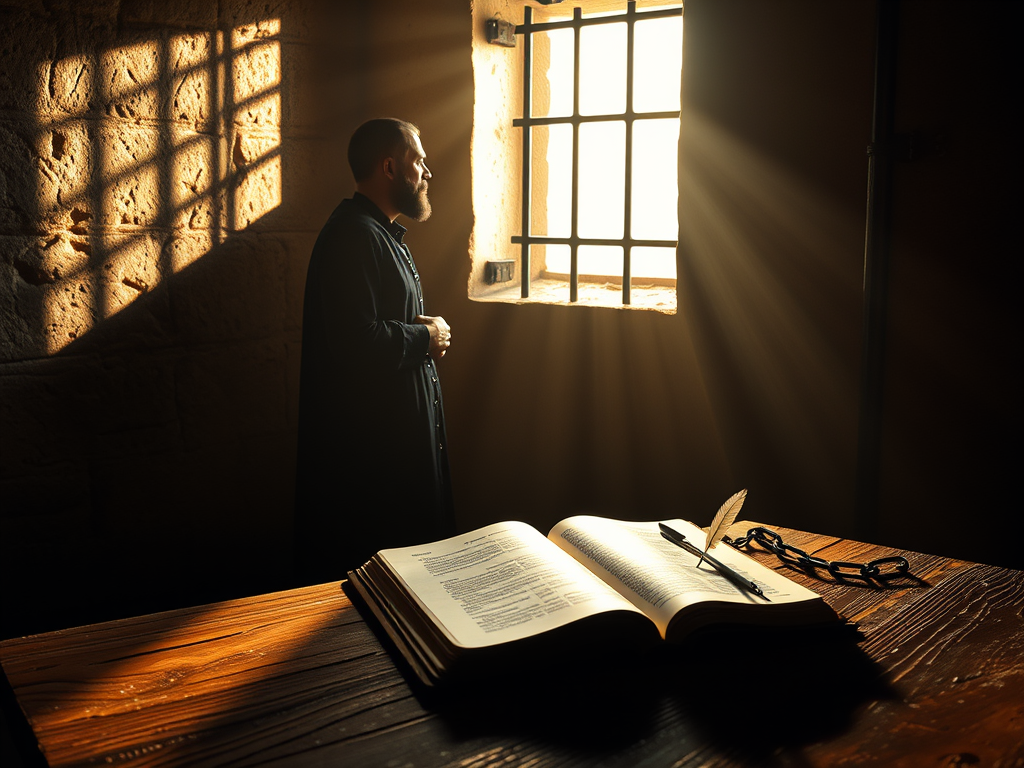
Paul wrote Philippians from a prison cell.
That detail matters more than it might first appear. When he writes the word “confident” — the Greek pepoithos (Strong’s G3982), a perfect participle carrying the force of a settled, established persuasion — he is not writing from a comfortable study surrounded by books and good lighting. He is writing from chains. And from chains, he declares with the quiet certainty of a man who has tested this truth under pressure: the God who started the work in you will not abandon it.
The promise of Philippians 1:6 is built on a single, stabilizing theological reality — the work of salvation does not originate with us, and therefore it does not depend on us to sustain it.
Notice carefully what Paul says. Not you who have begun a good work — but He who has begun. The subject of every verb in this sentence is God. He initiated. He is carrying forward. He will complete. The believer is the location of the work, not the source of it. This is not a passive invitation for us to sit idle — the whole letter of Philippians presses the church toward effort, prayer, and obedience. But it is a declaration that the driving energy behind every step of the Christian life belongs to the One who called you, not to the one who answered.
This is what theologians mean when they speak of salvation in three tenses — and all three are alive in this single verse. He who has begun points to justification: the decisive, completed act of God that declared you righteous in Christ at the moment you believed. Will complete points to sanctification: the ongoing, progressive work of God shaping you into the image of His Son, day by day, season by season, often through the very circumstances that feel most unlike grace. Until the day of Jesus Christ points to glorification: the moment when the work reaches its appointed end — when what God started in time will be made perfect in eternity.
The Greek word translated “complete” is epiteleō (Strong’s G2005) — to bring fully to the end, to accomplish perfectly what was begun. It is a finishing word. A word about arrival. And God is the one doing it.
Here is why this matters pastorally: most believers, at some point, arrive at a season where they are deeply aware of how far they still are from what they want to be. The habits that won’t break. The character flaws that keep surfacing. The distance between who they are on Sunday morning and who they are on Tuesday afternoon. In those seasons, the enemy has a ready accusation — God has given up on you. You’ve made too little progress. You’re too inconsistent. You’re not enough.
Philippians 1:6 cuts through every one of those accusations with a single word: confident.
Not hopeful. Not cautiously optimistic. Confident. The same God who chose you before you knew to ask, who moved in your heart before you knew to respond, who forgave you before you understood the depth of what you’d done — that God has not revised His plans for your soul. He does not start things He cannot finish. He does not abandon projects halfway through.
You may be in the middle of the work right now — unfinished, rough-edged, still being shaped. But you are in the hands of the One who completes what He begins.
Reflect: In what area of your life are you most tempted to believe that God’s work in you has stalled or that you’ve fallen too far behind? How does the truth that He is the one completing the work — not you — speak to that?
Pray: Father, thank You that my transformation is Your project, not mine. You began this work before I was aware of it, and You have promised to see it through to the day of Jesus Christ. On the days when I feel most unfinished, remind me that I am in the hands of the One who completes what He starts. I yield myself again today to Your work in me. In Jesus’ name, Amen.

Leave a Reply