
There’s a question I get asked more than almost any other: “Where is Jesus in the Old Testament?” It’s a good question—one that opens up the Scriptures in ways that can transform how we read our Bibles and deepen our faith in the God who has always been working to bring us to Himself.
The short answer? Jesus is everywhere. But let me show you what I mean.
More Than Prophecy
When most believers think about Jesus in the Old Testament, their minds go straight to prophecy—and rightly so. Isaiah 53’s suffering servant, Zechariah’s pierced one, the Messiah promised to David’s line. These are precious texts that point unmistakably to Christ.
But Jesus isn’t just predicted in the Old Testament. He’s present in it.
The apostle Paul makes a stunning claim in 1 Corinthians 10 when he writes that Israel in the wilderness “drank from the spiritual rock that followed them, and the rock was Christ.” Not “the rock represented Christ” or “the rock pointed to Christ”—the rock was Christ. Paul understood that the pre-existent Son was actively present with God’s people long before Bethlehem.
This changes everything about how we read the Hebrew Scriptures.
The Angel of the LORD: Divine Mystery in Human Encounter
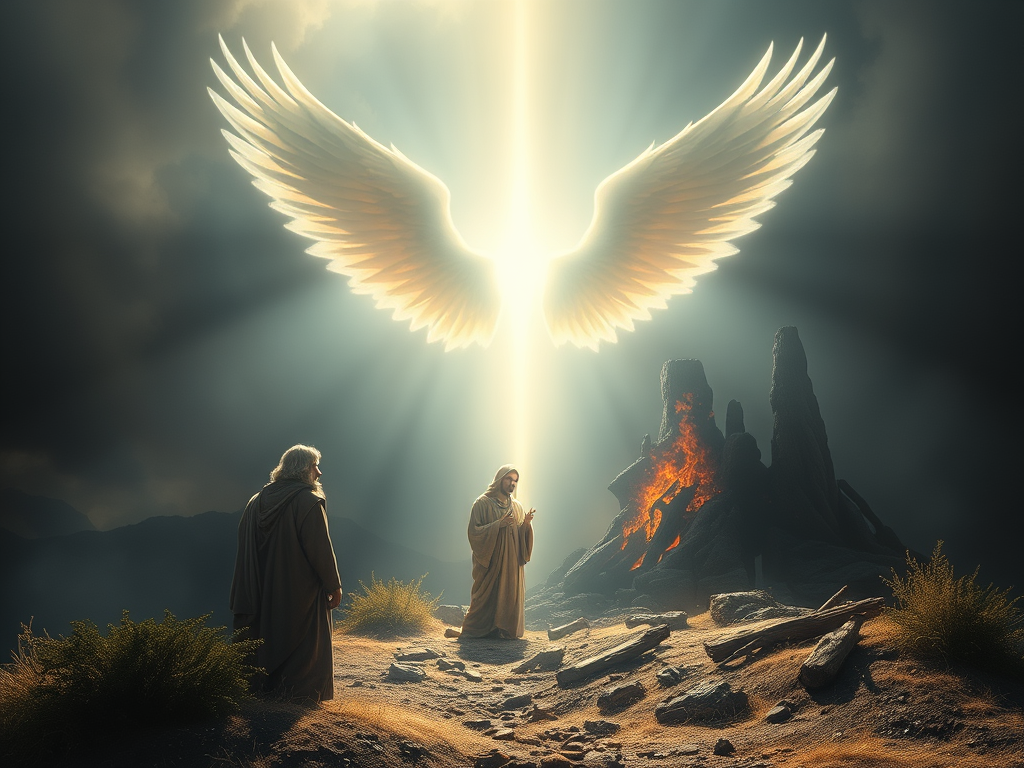
Throughout the Old Testament, we encounter a remarkable figure called “the angel of the LORD.” What makes this messenger so unusual is that He doesn’t behave like other angels. He speaks in the first person as God. He receives worship without correction. He makes promises only God can make. And yet He’s somehow distinguished from the Father who sends Him.
Consider Hagar, alone in the wilderness, fleeing from Sarah’s harshness. The angel of the LORD finds her, speaks tenderly to her, and makes covenant promises about her son. Her response? She names “the LORD who spoke to her”—recognizing that this messenger was God Himself.
Or think of Moses at the burning bush. Exodus tells us “the angel of the LORD” appeared in the flame, but then the narrative shifts seamlessly to calling the speaker simply “God” and “the LORD.” This figure demands Moses remove his sandals because the ground is holy. He reveals the divine name. He commissions the exodus. The angel and the LORD are somehow one and the same.
The same pattern appears with Abraham on Mount Moriah, with Jacob at Peniel, with Gideon under the oak tree, with Joshua outside Jericho. Again and again, this mysterious figure who is both sent by God and is God appears at critical moments in Israel’s story.
Many faithful interpreters throughout church history have understood these passages as “Christophanies”—pre-incarnate appearances of the Son of God. The One who would later be born in Bethlehem was already making the Father known, already meeting His people in their need, already revealing divine love in tangible encounter.
Shadows That Tell the Story
Beyond these personal appearances, the Old Testament is filled with what theologians call “types”—people, events, and institutions that function as God-designed previews of Christ’s person and work.
Think of it this way: God was telling the story of redemption long before the cross, embedding the pattern of salvation into Israel’s history so that when Jesus finally came, His people would recognize the plot.
Isaac on Moriah. A beloved only son carries the wood of his own sacrifice up a mountain. His father trusts that God will provide a lamb. At the last moment, a substitute dies in the son’s place. Abraham names the location “The LORD Will Provide,” looking forward to something greater. When we read this through the lens of the gospel, we see the Father’s love, the Son’s obedience, and the substitutionary sacrifice that would one day make Abraham’s blessing available to all nations.
The Passover lamb. A spotless lamb slain so its blood shields the household from judgment. No bones broken. The centerpiece of a covenant meal. When Paul writes “Christ, our Passover lamb, has been sacrificed,” he’s not making a clever comparison—he’s recognizing what God intended all along.
Melchizedek. A priest-king who appears briefly in Genesis, blesses Abraham, and then vanishes from the narrative. Hebrews 7 explains that this mysterious figure’s unique priesthood was a God-designed preview of Christ’s eternal ministry—the true King of Righteousness who serves as our High Priest forever.
Manna in the wilderness. Bread from heaven that sustained Israel day by day. Jesus would later declare, “I am the bread of life… Your fathers ate manna in the wilderness, and they died. This is the bread that comes down from heaven, so that one may eat of it and not die.”
The patterns are everywhere once you learn to see them.
Jacob’s Ladder and the True Bethel
One of my favorite examples comes from Genesis 28. Jacob, fleeing from his brother, sleeps in the open with a stone for his pillow. He dreams of a staircase reaching from earth to heaven, with angels ascending and descending on it. The LORD stands above it and renews the covenant promises.
Jacob wakes terrified and says, “This is none other than the house of God, and this is the gate of heaven.”
Now fast-forward to John 1. Jesus has just called Nathanael, who’s amazed that Jesus knew him before they met. And Jesus says something remarkable: “Truly, truly, I say to you, you will see heaven opened, and the angels of God ascending and descending on the Son of Man.”
Do you see what Jesus did? He took Jacob’s ladder and applied it to Himself. He is the staircase between heaven and earth. He is the true Bethel, the house of God, the gate of heaven. The vision Jacob received in the wilderness was always pointing to the Person who would one day make the Father accessible to fearful, compromised, undeserving people like Jacob—and like us.
Even Flawed Kings Point to Christ
The Old Testament kings, even the best of them, serve as both positive types and negative foils for Jesus.
Take Hezekiah. Here was a king who trusted God against impossible odds, tearing down idols and restoring true worship. When Assyria’s armies surrounded Jerusalem and mocked the living God, Hezekiah didn’t rely on military might or foreign alliances. He spread the threatening letter before the LORD and prayed. And God delivered—miraculously, completely, in a single night.
Hezekiah shows us what a faithful Davidic king looks like: one who trusts, reforms, intercedes, and experiences God’s saving power.
But Hezekiah also failed. After his deliverance, pride crept in. He showed Babylon’s envoys his treasures, and the prophet Isaiah declared that everything would one day be carried off to that empire. Hezekiah’s legacy, for all its brightness, points to the need for a greater King—one who would never stumble, never fail, never let pride corrupt His reign.
Jesus is that King. Where Hezekiah was faithful in part, Jesus was faithful completely. Where Hezekiah experienced temporary deliverance, Jesus won eternal victory. Where Hezekiah’s descendants would go into exile, Jesus leads His people into the promised land of God’s presence forever.
Why This Matters for Your Faith
I’ve spent years studying these patterns, not as an academic exercise, but because they have transformed how I understand God’s faithfulness.
Here’s what I want you to see: the God who appeared to Hagar in her desperation is the same God who meets you in yours. The God who provided a substitute for Isaac on Moriah provided the Lamb of God for your sins. The God who fed Israel with bread from heaven offers Himself as the bread of life for your soul. The God who went before His people in the pillar of cloud and fire still goes before you, leading and protecting.
The Old Testament isn’t just background information for the New Testament. It’s the first act of a unified drama, and Jesus is the hero of the whole story. When we learn to read it with Christ in view, we discover that God has always been working toward the same goal: bringing His people to Himself through His Son.
So the next time you open Genesis or Exodus or Isaiah, look for Him. Ask where the themes of sacrifice, deliverance, priesthood, and kingship appear. Notice when God draws near to His people in mysterious, personal ways. Pay attention to the patterns of substitute, rescue, and provision.
You’ll find Jesus on every page. And you’ll find that the same faithful God who met His people then is meeting you now—in Christ, the same yesterday, today, and forever.

Leave a Reply