
This is the first post of Revive Us Again, a ten-part series on revival and renewal in Scripture and church history.
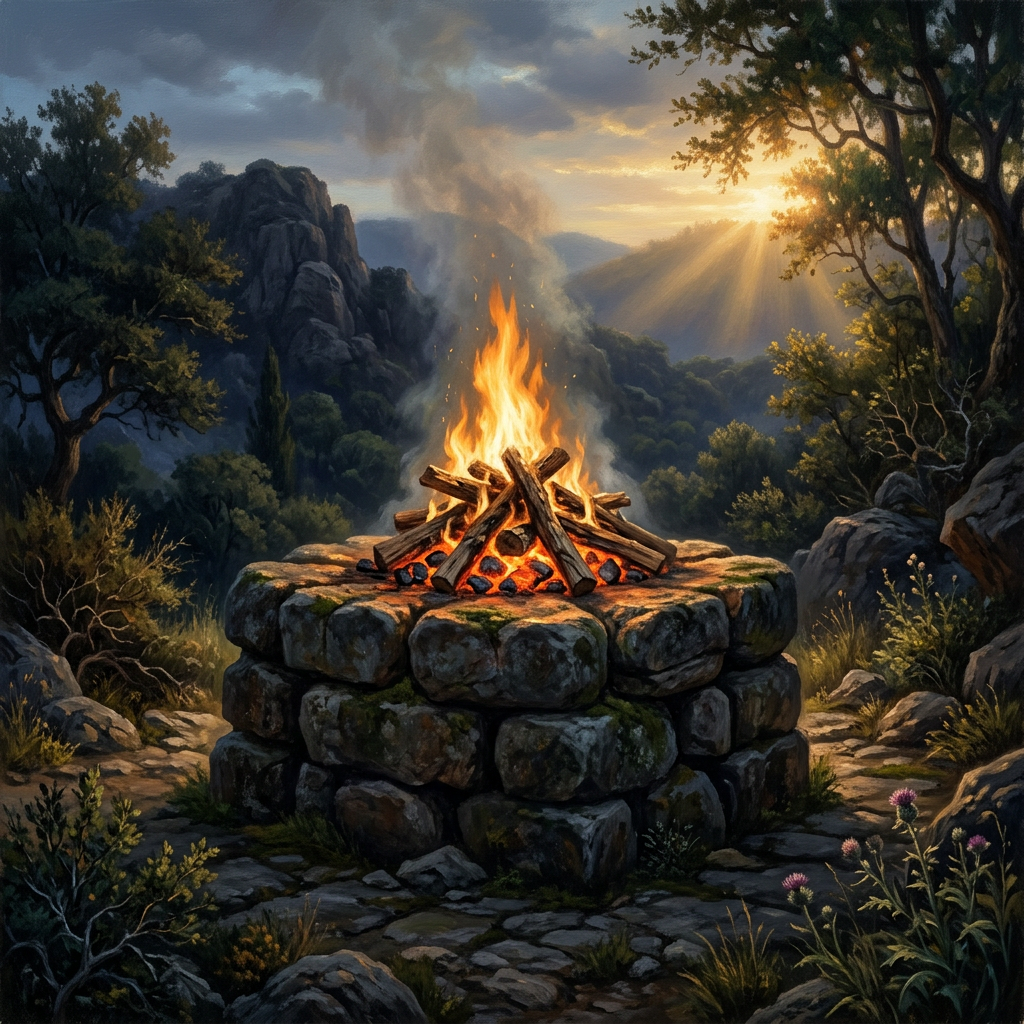
A fire shall always be burning on the altar; it shall never go out.
Leviticus 6:13 NKJV
Every fall the signs go up. Drive the back roads of Mississippi in September and you’ll pass a little brick church with plastic letters on a board out front announcing FALL REVIVAL, SUNDAY THROUGH WEDNESDAY, 7 P.M. A visiting evangelist’s name sits under the dates, and somebody in the kitchen is already planning the Wednesday night supper.
I have a soft spot for those weeks. Good preaching happens in them, and more than one sinner has come to Christ on the last night. But that sign raises a fair question. Can you put revival on a calendar? Can a church decide in August that God will visit it in September?
Most of us have never thought it through. We use the word for a set of meetings, for a full house, for a warm night at the altar, and for whatever God did in Wales a hundred years ago. Before this series walks through two thousand years of church history, we need to know what we mean. The clearest picture I know of sits in the book most Bible reading plans stall out in. Leviticus.
Heaven Lit It
On the eighth day after the priests were ordained, Aaron laid the first offerings on the new altar. He came out with Moses and blessed the people, and the glory of Jehovah appeared to the whole camp.
and fire came out from before Jehovah and consumed the burnt offering and the fat on the altar. When all the people saw it, they shouted and fell on their faces.
Leviticus 9:24 NKJV
No priest knelt over a pile of kindling with a flint that day. The fire on Israel’s altar came from heaven, and every man, woman, and child in the camp knew it. They shouted and went face down in the dirt.
That is where revival starts. God sends it. Nobody else can.
The Priests Kept It
Now back up three chapters. Before that fire ever fell, Moses had already received instructions for keeping it.
And the fire on the altar shall be kept burning on it; it shall not be put out. And the priest shall burn wood on it every morning, and lay the burnt offering in order on it; and he shall burn on it the fat of the peace offerings. A fire shall always be burning on the altar; it shall never go out.
Leviticus 6:12–13 NKJV
The Hebrew behind “every morning” says it twice, babboqer babboqer. Morning by morning. At daybreak somebody walked out to the woodpile, loaded his arms, and laid fresh wood on the coals. Then he did it again the next day, and the day after that. Nobody wrote most of those mornings down. The wood went on, the fire took it, and the sacrifices went up.
Verse 13 adds two more words. The fire shall always be burning. That is tamid, the word Moses uses for the daily burnt offering that never missed a morning or an evening (Numbers 28:3). And it shall never go out. That verb is kabah, to be quenched, to die down to nothing.
Kabah turns up in one of the darkest chapters of Israel’s story. Eli was old. His sons were stealing from the sacrifices. The word of Jehovah was rare in those days. Yet on the night God first called the boy Samuel, the writer tells us the lamp of God had not yet gone out (1 Samuel 3:3). Same verb. The lamp in the tabernacle was burning low and smoky, and it was still burning when God spoke to the boy who would turn the nation back.
Heaven lit the fire on Israel’s altar. Every morning after that, a priest carried wood to it.
The Match and the Porch
The church has drifted off that picture more than once, on one side or the other.
Some churches think they can strike the match themselves. Book the right evangelist. Get the music right. Add a fifth night if the crowd holds. Press people at the altar until they come forward. The nineteenth century got very good at this, and later in this series we’ll look at what it produced. Leviticus has a name for fire that men light on their own. Aaron’s sons Nadab and Abihu filled their censers with “profane fire before Jehovah, which He had not commanded them” (Leviticus 10:1, NKJV). In Hebrew, Leviticus 9:24 and 10:2 open with the same words. Fire went out from before Jehovah and consumed. In chapter 9 it consumed the offering. In chapter 10 it consumed two priests. God has not changed His mind about strange fire.
Other believers swing the other way. Revival is God’s business, so we’ll fold our hands and wait for Him to send it. That sounds humble. But it forgets the woodpile. Every revival in church history found people already carrying wood before the fire fell. They were praying in a barn three nights a week, or reading the Scriptures when nobody else bothered, or grieving over a cold church while everyone around them called it normal. The fire fell on altars somebody had been tending.
Heaven lights the fire. The priests carry the wood. Scripture holds both truths, and so will this series.
Three Words
We’ll use three words in the posts ahead, and it helps to keep them straight.
Renewal is a believer or a church called back to first love. Jesus said it to Ephesus, a hardworking church with sound doctrine. “Nevertheless I have this against you, that you have left your first love” (Revelation 2:4, NKJV). Paul said it to Timothy, a faithful pastor and his own son in the faith. “Stir up the gift of God which is in you” (2 Timothy 1:6, NKJV). The verb there is anazōpyreō, to fan embers back into flame. Picture a man on his knees at a cold hearth, blowing on the coals. Renewal can happen in one heart at the kitchen table on a weekday morning.
Revival is God visiting His people with unusual power. Sin that sat untouched for years gets confessed in a night. People come to a prayer meeting and won’t go home. The psalmist begged for it. “Will You not revive us again, That Your people may rejoice in You?” (Psalm 85:6, NKJV). The Hebrew runs close to “Will You not turn and give us life?” The first verb is shuv, to turn or return. The second is chayah, to live, and in this form, to make alive. Revival is God’s people brought back to life, and joy is the mark it leaves on them.
Awakening is what happens when the fire spreads past the church walls. The town notices. Men who haven’t sat in a pew since their grandmother’s funeral end up on their knees. Paul told the Romans it was “high time to awake out of sleep” (Romans 13:11, NKJV), and the verb he used, egeirō, is the one the New Testament uses for raising the dead.
That answers the question on the sign out front. Renewal is ours to practice every morning. Revival and awakening are God’s to send. A church can put meetings on the calendar and pray hard over every one of them, but whether God visits that week is His to decide.
Where This Series Is Going
Over the next nine posts we’ll walk through the record. Kings who reopened a shut temple, and a scroll found in the rubble. The Spirit falling in Acts, and falling again on the same people. Reformers who put the Bible back in plain hands. A village of quarreling refugees in Germany that learned to love one another and then prayed around the clock for a hundred years. Jonathan Edwards and the hard work of telling true fire from false. Six men at a noon prayer meeting in New York. Fires in Wales, Los Angeles, and Korea within four years of each other. Two old sisters on a Scottish island, and college students who would not leave a chapel.
I won’t skip the ash. Some revivals burned bright and were cold within a few years. Some produced as much wildfire as true fire. Telling only the bright parts would turn church history into an advertisement, and it would dishonor the God who sent the fire.
Kindling
You can’t light the fire. You can carry one armload this week.
Set a morning appointment and keep it. Before the phone, before the news, open your Bible to Psalm 85 and pray verse 6 for your own heart. Then pray it again for your church, by name. Do the same thing tomorrow. That is wood on the altar, and it has never looked like much.
And if your own fire is low right now, look at the prophet who prayed the prayer this series will keep coming back to. Habakkuk knew the Babylonians were coming. God had told him so (Habakkuk 1:6). Judgment was already on the road. He prayed anyway.
O Jehovah, revive Your work in the midst of the years! In the midst of the years make it known; In wrath remember mercy.
Habakkuk 3:2 NKJV
The verb is chayah again. Habakkuk did not wait for better years to ask God for life. He asked in the middle of the worst ones.
Word Study
| Term | Original | Strong’s | Meaning | Key text |
|---|---|---|---|---|
| chayah | חָיָה | H2421 | to live, and in the intensive stem to give life, revive | Ps 85:6; Hab 3:2 |
| shuv | שׁוּב | H7725 | to turn, return, come back | Ps 85:6 |
| tamid | תָּמִיד | H8548 | continually, without interruption, the word for the daily burnt offering | Lev 6:13; Num 28:3 |
| kabah | כָּבָה | H3518 | to go out, be quenched, die down | Lev 6:12–13; 1 Sam 3:3 |
| anazōpyreō | ἀναζωπυρέω | G329 | to rekindle, fan embers back into flame | 2 Tim 1:6 |
| egeirō | ἐγείρω | G1453 | to wake, rouse, raise up | Rom 13:11 |
Discussion Questions
- When you hear the word revival, what comes to mind first? Where did that picture come from?
- Read Leviticus 9:24 and 6:12–13 side by side. What does each passage say about God’s part and ours?
- Which error do you see more often in churches you know, trying to light the fire ourselves or folding our hands and waiting?
- Of the three words, renewal, revival, and awakening, which one do you most need right now? Which one does your church need?
- Habakkuk prayed for revival with judgment already on the way. What would it look like to pray that prayer in a hard season instead of waiting for an easier one?
Going Deeper
- Iain H. Murray, Revival and Revivalism (Banner of Truth, 1994). Murray draws the line between revival sent by God and revivalism produced by men. We’ll lean on him in Post 7.
- Richard Lovelace, Dynamics of Spiritual Life (InterVarsity, 1979). A careful study of what renewal looks like across church history and what keeps it going.
- Jonathan Edwards, The Distinguishing Marks of a Work of the Spirit of God (1741). Short, free online, and still the best test of whether a fire came from heaven. Post 6 is built on it.
- Gordon J. Wenham, The Book of Leviticus (NICOT, Eerdmans, 1979). For anyone who wants to spend more time at the altar.
This post is drawn from The Fire Shall Never Go Out, my book in progress on two thousand years of revival and renewal.

Leave a Reply