This is part nine of Praying the Psalms on Your Worst Day. Today, Psalm 103, for a different kind of worst day, the one where nothing is wrong and you have stopped noticing why.
Not every bad day feels bad.
Some of the most dangerous seasons in a believer’s life are the easy ones. The bills are paid. The kids are fine. The doctor says keep doing what you are doing. And somewhere in all that ordinary blessing, you stopped thanking God for it. You never decided to. You just forgot.
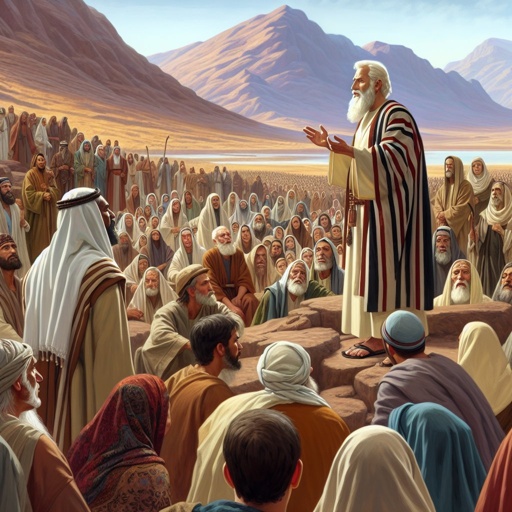
Moses saw it coming before Israel ever crossed the Jordan.
Beware that you do not forget Jehovah your God by not keeping His commandments, His judgments, and His statutes which I command you today, lest, when you have eaten and are full, and have built beautiful houses and dwell in them; and when your herds and your flocks multiply, and your silver and your gold are multiplied, and all that you have is multiplied; when your heart is lifted up, and you forget Jehovah your God who brought you out of the land of Egypt, from the house of bondage.
Deuteronomy 8:11–14 NKJV
When you have eaten and are full. That is when you forget. Hunger keeps people praying. Plenty puts them to sleep.
The Same Word, Turned Around
Bless Jehovah, O my soul; and all that is within me, bless His holy name! Bless Jehovah, O my soul, and forget not all His benefits.
Psalm 103:1–2 NKJV
In Psalm 13 David asked God, Will You forget me forever? The word was shakach. Here it is again, and David has turned it around. He is no longer worried that God will forget him. He is worried that he will forget God.
And like the man in Psalms 42 and 43, he talks to his own soul. There it was to lift a soul out of despair. Here it is to wake a soul out of ingratitude. Bless Jehovah, O my soul. He is giving himself orders. He does not wait to feel thankful. He tells himself to be.
The word benefits is gemul, from the same root as gamal, the verb at the end of Psalm 13. He has dealt bountifully with me. In Psalm 13 David remembered God’s bountiful dealing to get through the dark. In Psalm 103 he remembers it to keep from drifting off in the light.
The List
Who forgives all your iniquities, who heals all your diseases, who redeems your life from destruction, who crowns you with lovingkindness and tender mercies, who satisfies your mouth with good things, so that your youth is renewed like the eagle’s.
Psalm 103:3–5 NKJV
Five verbs. Forgives. Heals. Redeems. Crowns. Satisfies.
Look at which one comes first. Before health, before rescue, before any good thing on the table, David remembers that he has been forgiven. The word is avon, iniquity, the twisted-guilt word from Psalm 51. The man who prayed Psalm 51 never got over being forgiven. It stayed at the top of his list for the rest of his life.
And crowns you with lovingkindness. Chesed, the word every psalm in this series has leaned on. In Psalm 51 David begged for it. Here he is wearing it.
The man who prayed Psalm 51 never got over being forgiven. It stayed at the top of his list for the rest of his life.
Merciful and Gracious
Jehovah is merciful and gracious, slow to anger, and abounding in mercy.
Psalm 103:8 NKJV
David did not make that sentence up. He is quoting. When Moses went back up the mountain after the golden calf, after Israel had broken the covenant almost before the ink was dry, Jehovah passed by him and proclaimed His own name.
And Jehovah passed before him and proclaimed, “Jehovah, Jehovah God, merciful and gracious, longsuffering, and abounding in goodness and truth.”
Exodus 34:6 NKJV
God announced His mercy on the heels of Israel’s worst sin. David, who had committed his own worst sin, took God’s description of Himself and set it in the center of his song. The prophets kept quoting it for centuries. Joel. Nehemiah. Jonah, who complained about it. It became one of the most repeated descriptions of God in the Old Testament.
East From West
He has not dealt with us according to our sins, nor punished us according to our iniquities. For as the heavens are high above the earth, so great is His mercy toward those who fear Him; as far as the east is from the west, so far has He removed our transgressions from us.
Psalm 103:10–12 NKJV
Transgressions in verse twelve is pesha, the rebellion word, the first word David used for his sin in Psalm 51:1. There he begged God to blot it out. Here he tells you how far it went. As far as the east is from the west.
Think about that measurement. You can travel north until you reach the pole, and then every step takes you south. But you can travel east forever and never start going west. David names a distance that has no end. The sin is gone.
We Are Dust
As a father pities his children, so Jehovah pities those who fear Him. For He knows our frame; He remembers that we are dust.
Psalm 103:13–14 NKJV
This is the turn in all the forgetting. We forget what God has done. God remembers what we are. He knows we are dust, taken from the ground in Genesis 2 and headed back to it. He does not expect from us what He would expect from angels. He pities us the way a father pities a child who is trying hard and falling short.
Then David sets that frailty right next to God’s mercy. Man’s days are like grass. The wind passes over it and it is gone. “But the mercy of Jehovah is from everlasting to everlasting on those who fear Him” (103:15–17). We wither. His chesed does not.
The Words Under the Words
| Word | Original | Strong’s | Meaning |
|---|---|---|---|
| barak | בָּרַךְ | H1288 | To bless, to kneel, to praise. “Bless Jehovah, O my soul,” verses 1, 2, and 20–22 |
| shakach | שָׁכַח | H7911 | To forget. “Forget not all His benefits,” verse 2, the word of Psalm 13:1 |
| gemul | גְּמוּל | H1576 | Benefit, what has been done for someone. From the root of gamal in Psalm 13:6 |
| zakar | זָכַר | H2142 | To remember, to keep in mind. “He remembers that we are dust,” verse 14 |
For the One Who Has Gone Numb
This is the post for people who would not call themselves hurting. You are fine. That is the problem. Fine has become the room you live in, and you cannot remember the last time you thanked God for anything specific.
The cure David used was a list. He made one, and he ordered his own soul to read it. Put your own life under each of his five verbs and you will find more than you expected. Somewhere around the third or fourth line, your soul will start to wake up.
Pray It This Week
Get a sheet of paper and write the five verbs from verses three through five down the left side. Forgives. Heals. Redeems. Crowns. Satisfies. Next to each one, write at least one line from your own life. A sin He forgave. A sickness you came through. A time He pulled you out of something you walked into. A kindness you did not deserve. A good thing on your table. Then read the whole list back to God as praise, and tape it somewhere you will see it again next month.
Bless Jehovah, O my soul. Wake up and bless Him. I have been fine so long I forgot why. You forgave all my iniquities, and You put the worst of them as far as the east is from the west. You healed me. You pulled me out. You crowned me with lovingkindness I never earned. You filled my table. You remember that I am dust. Help me remember what You have done. Amen.
Discussion Questions
- When are you most likely to forget God, in hard seasons or easy ones? Why?
- Why do you think forgiveness comes first in David’s list of benefits?
- Read Exodus 32 and then Exodus 34:1–7. What does it tell you about God that He proclaimed His mercy right after the golden calf?
- How does “He remembers that we are dust” change the way you think about your own failures?
- Which of the five verbs in verses 3 through 5 have you stopped noticing?
Going Deeper
Read Psalm 103 and Psalm 104 together. Both begin and end with Bless Jehovah, O my soul, and they were almost certainly meant as a pair. Psalm 103 remembers what God has done for His people. Psalm 104 remembers what He has done in creation. Then trace Exodus 34:6 through the rest of the Old Testament in Joel 2:13, Jonah 4:2, Nehemiah 9:17, and Psalm 145:8. Notice which of those writers was glad about it and which one was angry.
Next in the series, the final post, Psalm 22, and the prayer Jesus prayed from the cross.

Leave a Reply