
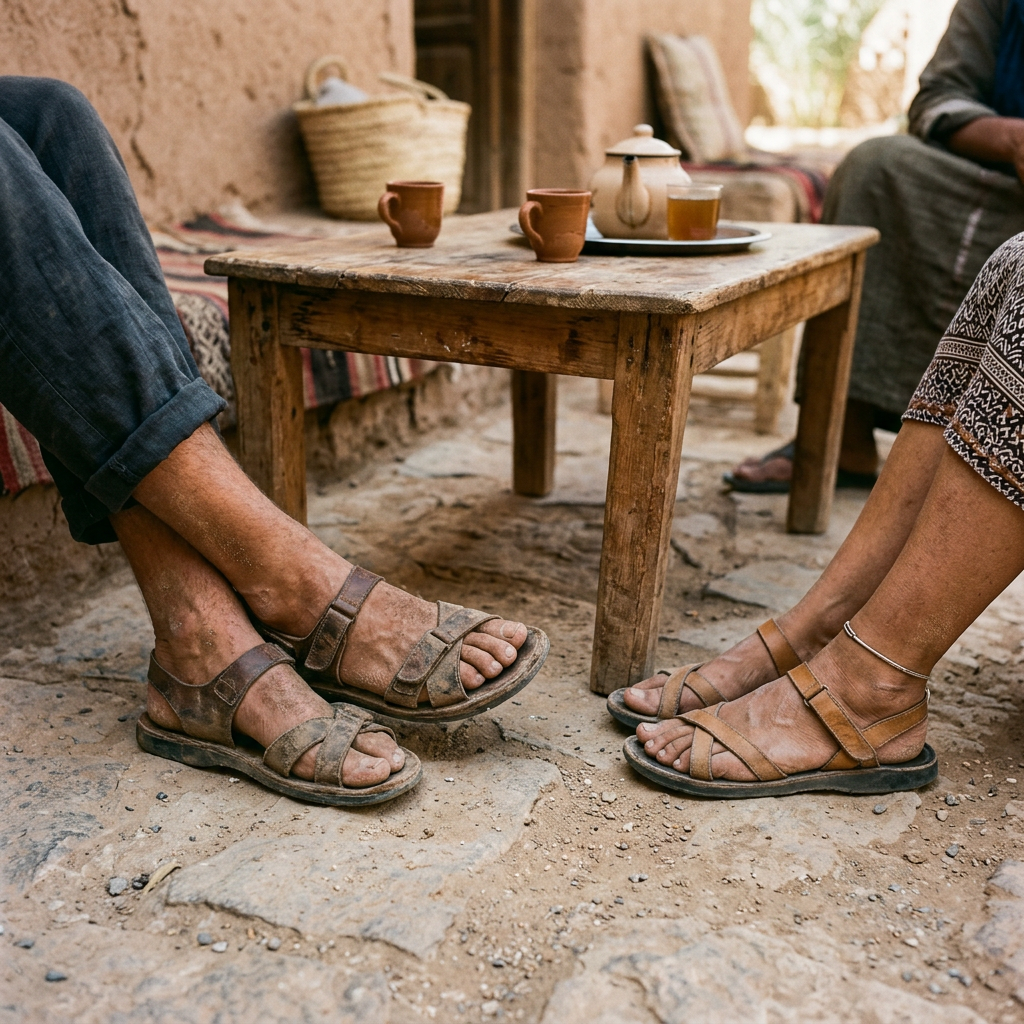
Every culture teaches its body things. How close to stand to a stranger. How to greet a guest at the door. What posture says respect and what posture says contempt. Which gestures are insults and which are honors. None of this gets written down in a manual. The body learns it from being in the room.
The first-century body knew an enormous number of things that the twenty-first-century body has never been taught. They reclined at the table. They washed feet at the door. They tore their robes when grieving. They kissed in greeting. They covered their heads to mourn and uncovered them to bless. They knew the difference between a backhand slap and an open-hand strike, between a soldier compelling a mile and a subject volunteering the second. They knew when a courtesy had been deliberately withheld and when a gesture had been deliberately exaggerated for show.
Read the Gospels through twenty-first-century body language and you will miss half of what is happening. The original hearers felt the meaning of a scene before any words were spoken, because the bodies in the scene were already speaking a language they knew by heart.
The father who ran
The parable of the prodigal son is built on gesture from start to finish. Almost every detail the father does at the boy’s return is a status marker the original audience read fluently and we read past.
When the father calls for the best robe, he is putting his own honor robe on a son who came home in rags. The ring is signet authority, the right to act in the family name and pledge family debt. Sandals mark a free son, since household slaves went barefoot. Full sonship is restored in three gestures before the boy can finish the speech he rehearsed in the pig field.
And before any of the gifts, the father runs.
A dignified Middle Eastern patriarch did not run. To run he would have hiked up his robe and bared his legs in front of the whole village, taking on shame in public to reach the son first. He absorbs the disgrace the boy is about to walk through and meets him in the road with it already done.
The original hearers gasped at the running before the ring ever got to the finger. The body of the father had already preached the gospel.
Foot washing and rank
Foot washing was the lowest slave’s job. So degrading that some rabbinic sources say a Hebrew slave could not be made to do it. Only a Gentile slave. The task was beneath the dignity of any free Israelite.
At the Passover table Jesus takes the towel no free man would touch and washes the feet of twelve men who have been arguing on the way over about which of them was the greatest. The shock for the disciples is not the hygiene. It is the rank.
Peter blurts out the protest the others were thinking. You shall never wash my feet. Jesus tells him, “If I do not wash you, you have no part with Me” (John 13:8, NKJV). The lowest position is where the Lord chose to stand. If you cannot let him kneel to you, you cannot stand with him.
Turn the other cheek
We have softened this saying into something it never was. The original hearers heard something specific.
Jesus specifies the right cheek. That detail matters. To strike a man’s right cheek with your right hand, you have to use the back of the hand. The backhand slap was how a superior struck an inferior in that world. A master a slave. A Roman a Jew. It was an insult more than a wound.
To turn and offer the left cheek forces the striker to reach with an open palm or a closed fist, the way you strike a peer. You hit equals that way. The gesture quietly denies the insult its meaning. It is not passivity. It is a refusal to be treated as less. It hands the striker an impossible choice. Insult you again with the wrong hand or admit you are not less.
Turn the other cheek is not surrender. It is defiance under control.
Your body is still preaching
The Gospels are full of body language we now read past. The shepherd lying down across the gap of the sheep pen as the gate. The tax collector beating his breast at the temple. The Samaritan woman coming to the well alone in the heat of noon. The four friends digging through the roof. Zacchaeus up a sycamore tree. The cross beam carried down a road where everyone watching knew it was a death march.
Read with the bodies in mind and the scenes pop back into three dimensions. Read past the bodies and you get a flat version of the same stories.
There is a lesson for the way we live in this too. Your body is still preaching. The first century had this right. What your body does in a room speaks before your mouth opens. The kept courtesy. The withheld kindness. The crossing of the room to greet someone. The deliberate looking away. The seat chosen at the table. The basin picked up or set down.
We have not outgrown the body’s sermon. We have just stopped paying attention to ours. Jesus did not. Every gesture in his ministry was chosen. The right hand on the leper. The mud on the blind man’s eyes. The reaching to lift Peter’s mother-in-law. The look at the rich young ruler that the text says was a look of love. He preached with his body all the way through. The bodies of the people around him preached back.
That conversation is still happening for anyone willing to look.
This is part of the Hidden in Plain Sight series.

Leave a Reply