
John 7:37 is one of the most quoted lines in the Gospel of John. “If anyone thirsts, let him come to Me and drink.” We hear it as a general invitation, a beautiful sentence we can put on a worship slide.
The first hearers heard it on a specific day, in a specific court, after a specific ceremony. The day they heard it on is what makes the saying land like a thunderclap.
The feast that walked them through the wilderness
Tabernacles, called Sukkot in Hebrew, was the third of the great pilgrimage feasts in the Jewish year, falling in the autumn. Eight days. Jewish households built temporary booths and lived in them for the week to remember the wilderness wandering, when God himself had been their tent and their shade. The feast was joyous, festive, and packed with ceremony.
Two ceremonies in particular dominated the temple courts during Tabernacles. The first was the daily water pour. The second was the lighting of the great lampstands at night.
The water pour
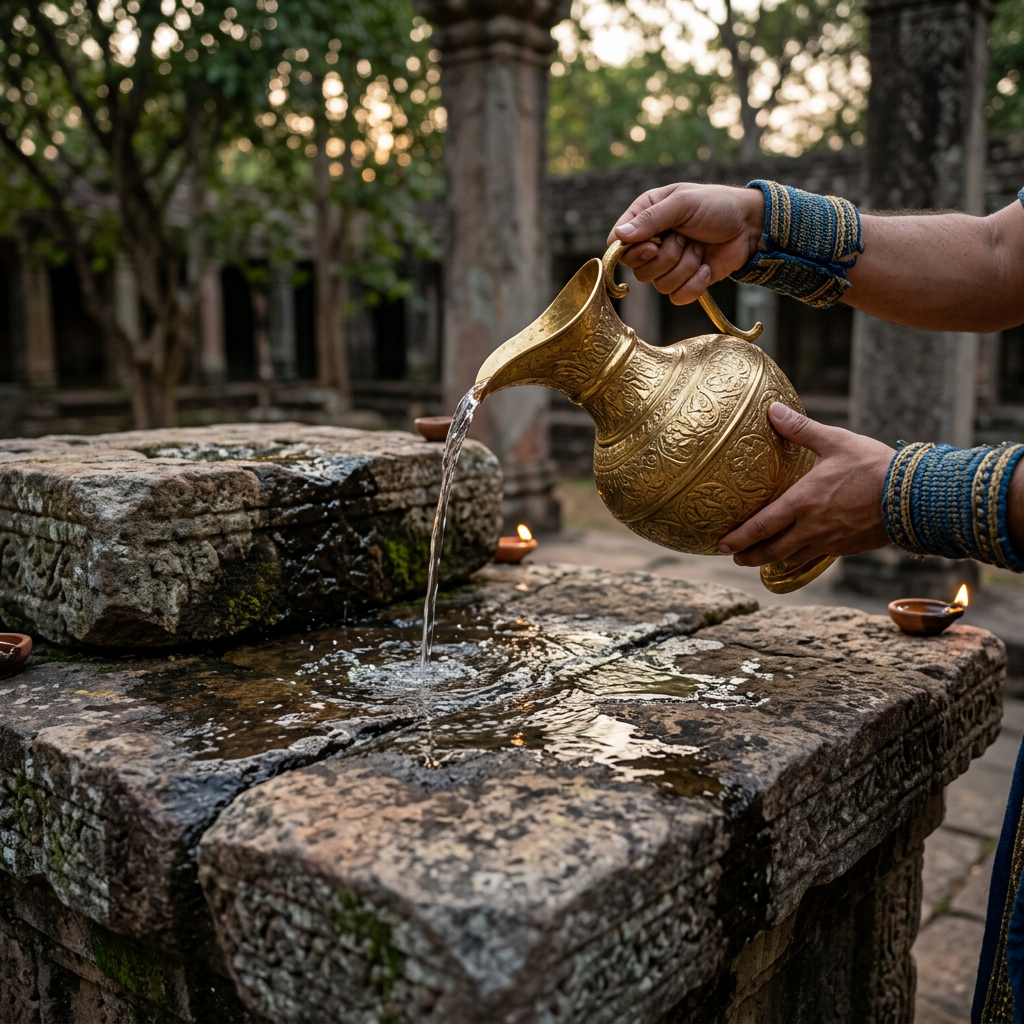
Every morning of the feast, a priest descended from the temple platform to the Pool of Siloam at the southern end of the city. He filled a golden pitcher with water from the pool, then ascended in procession back up to the temple, accompanied by the singing of the Hallel, Psalms 113 through 118. As he entered the temple courts, the priest poured the water out at the base of the altar alongside the morning drink offering.
The ceremony was deeply prophetic in its symbolism. Two prayers were folded into one. The first prayer was for rain. The fall feast came at the very end of the dry season, when the land was parched and the agricultural year depended on the latter rains. The water pour was a plea for the heavens to open.
The second prayer was for the Spirit. The rabbinic tradition explicitly linked the water pour to Isaiah 12:3, “Therefore with joy you will draw water from the wells of salvation.” The water from Siloam became a symbol of the Spirit of God poured out on the people of God. The ceremony was a thousand-year-old prayer asking God for the Spirit he had promised.
The seventh day and the eighth day
Tabernacles ran for seven days, with a closing assembly on the eighth. On the seventh day, the water ceremony was performed not once but seven times. The priests circled the altar seven times with the water, in echo of the Israelites circling Jericho seven times before the walls fell.
John tells us this is the day Jesus chose to speak. “On the last day, that great day of the feast, Jesus stood and cried out, saying, ‘If anyone thirsts, let him come to Me and drink. He who believes in Me, as the Scripture has said, out of his heart will flow rivers of living water’” (John 7:37-38, NKJV).
On that exact day, in that exact moment. The pitcher was still in the priest’s hand. The crowd was still singing the Hallel. The water was still running off the altar at the base of the stones.
The thing the ceremony had been begging for
John makes the meaning explicit two verses later. “But this He spoke concerning the Spirit, whom those believing in Him would receive; for the Holy Spirit was not yet given, because Jesus was not yet glorified” (John 7:39, NKJV).
Stop and feel the weight of what just happened.
The priest had just poured water that symbolized the Spirit. The crowd had just sung the prayer asking for the Spirit. The whole eight-day feast had been a slow procession toward the moment when the people of God begged the heavens to open and the Spirit to fall.
And in the middle of that prayer, Jesus stood up and said the answer has arrived. Come to me. The Spirit you are pleading for is poured out through me. He did not deliver a treatise on pneumatology. He hijacked the morning prayer of his nation and gave it a face.
Why this changes how we read the verse
Read John 7:37 without the calendar and it is a general invitation. Lovely. Pastoral. Easy to put on a slide. You can come away from the verse feeling warm and not sure exactly what was being claimed.
Read it with the calendar and the claim is enormous. The Spirit of God, the ruach of Genesis, the breath that hovered over the waters, the Spirit Joel promised would be poured out on all flesh, the Spirit the prophets said the Messiah would bring, has come. He has come in a person. And the person is standing in the temple courts on the seventh day of Tabernacles, with water still pouring off the altar, saying come to me and drink.
The water pour did not survive the destruction of the temple in 70 AD. The ceremony stopped. The pitchers were lost. The priests scattered.
But the Spirit Jesus offered in the middle of the ceremony is still pouring out. The thing the ceremony had been begging for has been given. We are living downstream of the answer to a thousand-year-old prayer.
This is part of the Hidden in Plain Sight series.


Leave a Reply