A quick word before we start. The Amazon links below are affiliate links. If you buy through them, I earn a small commission at no extra cost to you. As an Amazon Associate I earn from qualifying purchases.




Most of us find it easier to read the Bible than to pray. Hand us a reading plan and we will work through it. Ask us to pray for fifteen minutes and we run dry in about four.
In Borrowed Words I wrote about the small vocabulary most of us pray with. The same twenty or thirty sentences, used for years. Bless this food. Be with so-and-so. Guide and direct. They get us through an ordinary Tuesday, and then a hard day comes and they are gone.
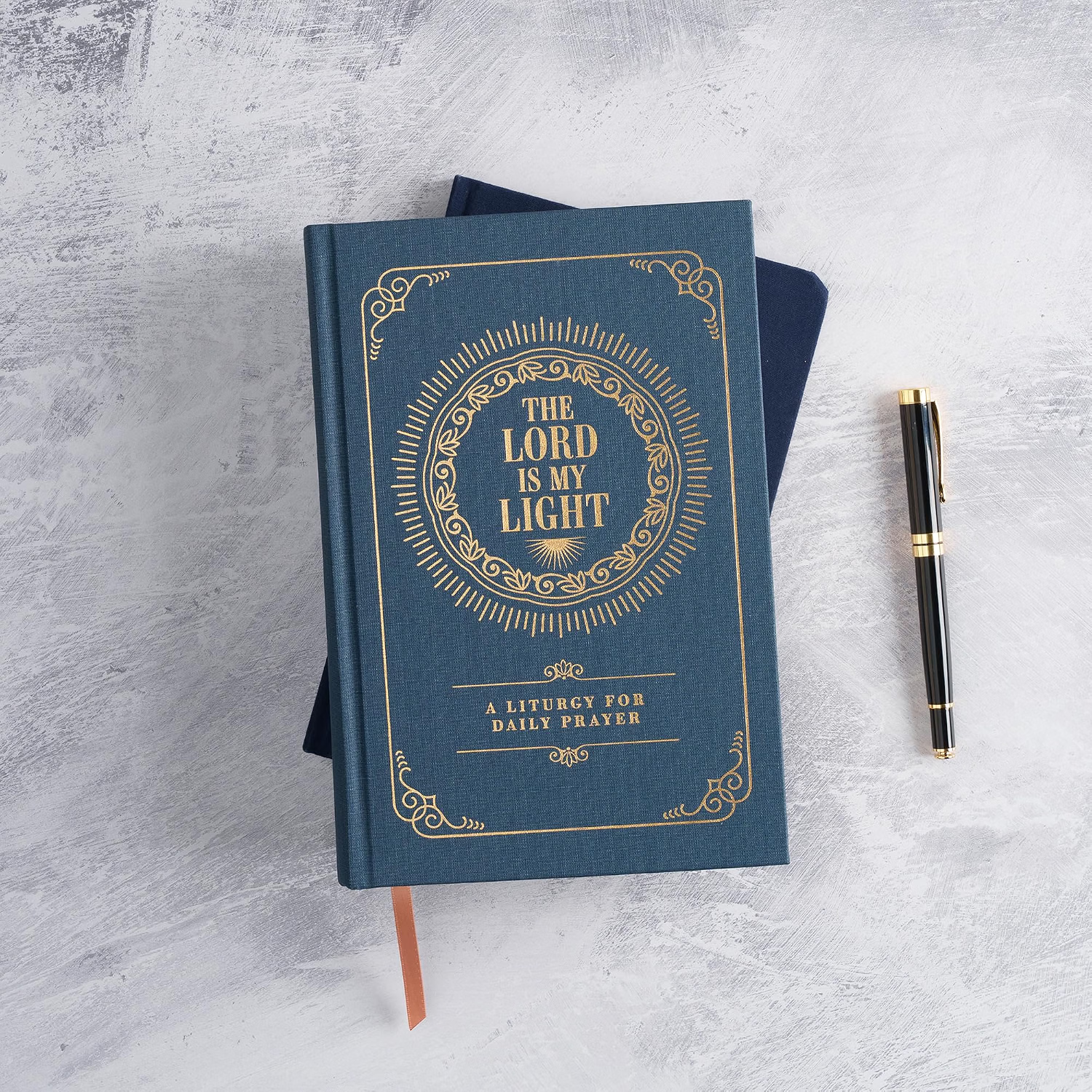
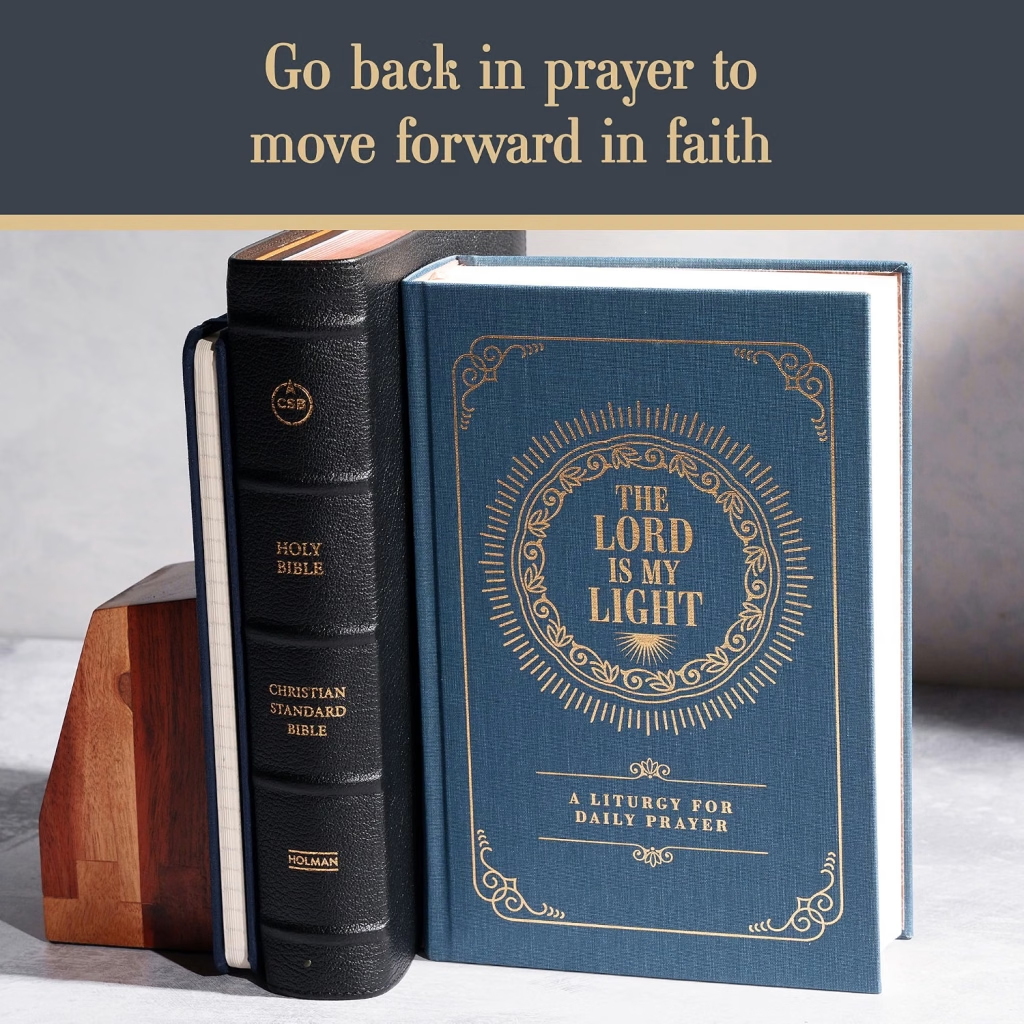
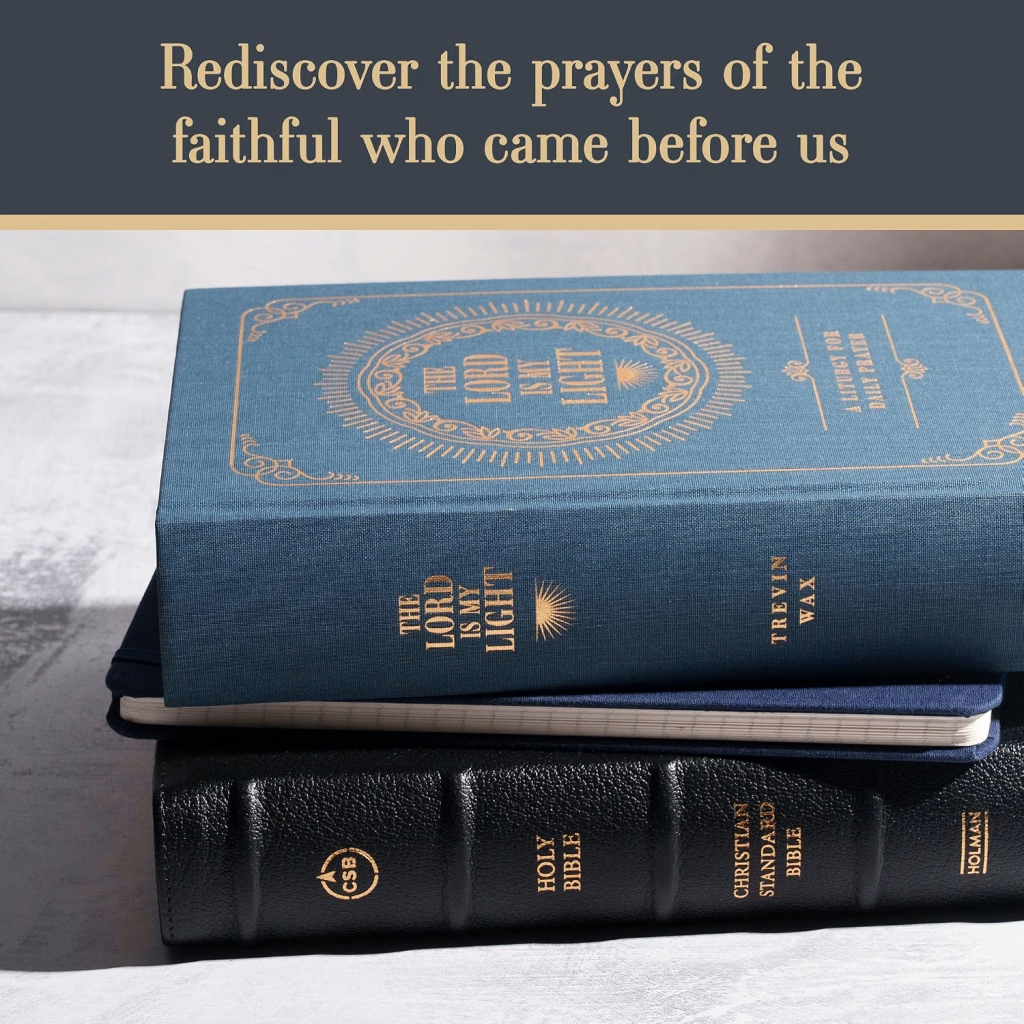
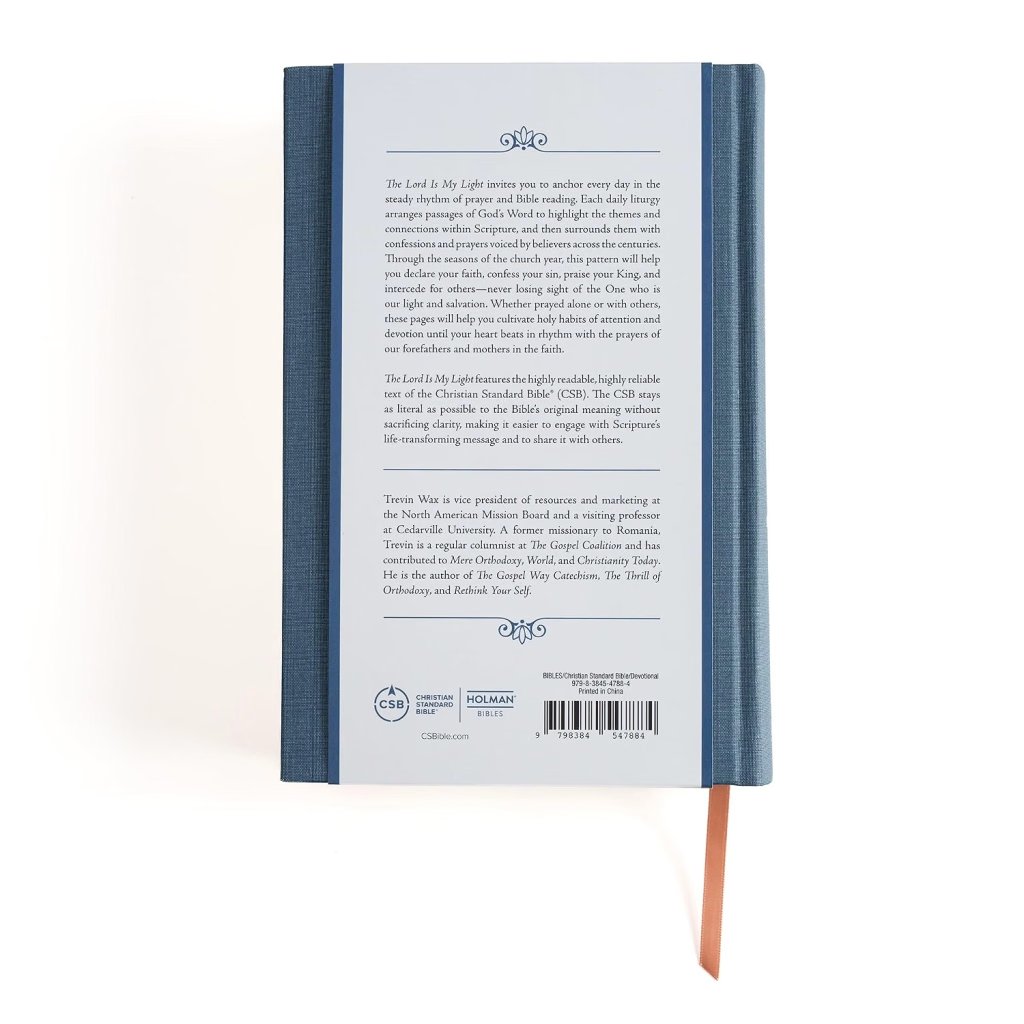
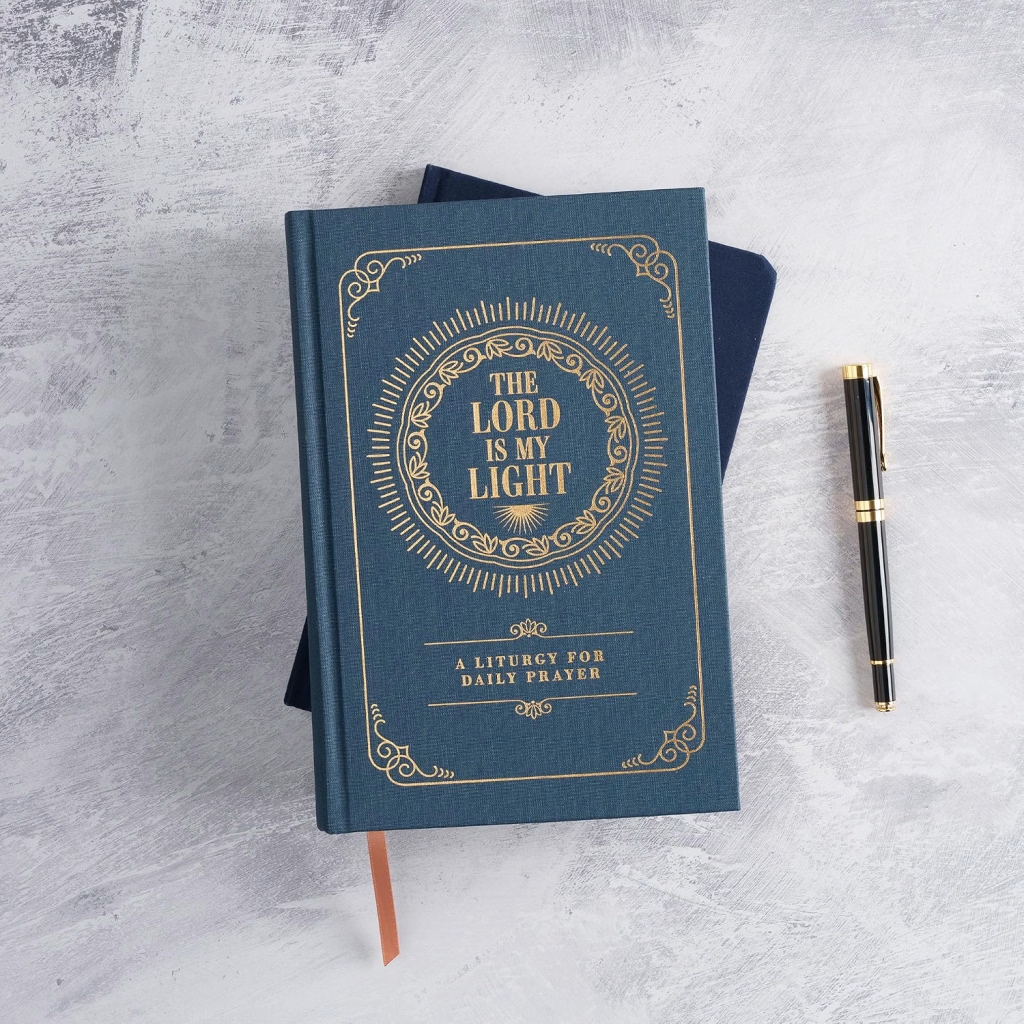
Trevin Wax has spent more than twenty years gathering prayers from Christians across church history. His new book puts them to work. The Lord Is My Light, subtitled A Liturgy for Daily Prayer, sets a passage of Scripture at the center of each day and surrounds it with creeds, confessions, psalms, and the prayers of believers who walked this road long before we did. Holman released it November 1, and the Scripture in it comes from the Christian Standard Bible.
That last detail caught my attention. The NKJV is still my main study translation. The CSB is the one I read for personal devotions, and a lot of the time I have both open and go back and forth. A book of daily prayer built on the CSB lands in the part of my day that already belongs to that translation.
What You Get
| Feature | Details |
|---|---|
| Title | The Lord Is My Light: A Liturgy for Daily Prayer |
| Author | Trevin Wax |
| Publisher | Holman Reference, B&H Publishing Group |
| Translation | Christian Standard Bible (CSB) |
| Daily liturgies | 396, enough for every day of the year plus extra readings for the moving date of Easter |
| Calendar | Begins in Advent and follows the church year |
| Scripture setting | No verse numbers, so the readings flow like a reader’s Bible |
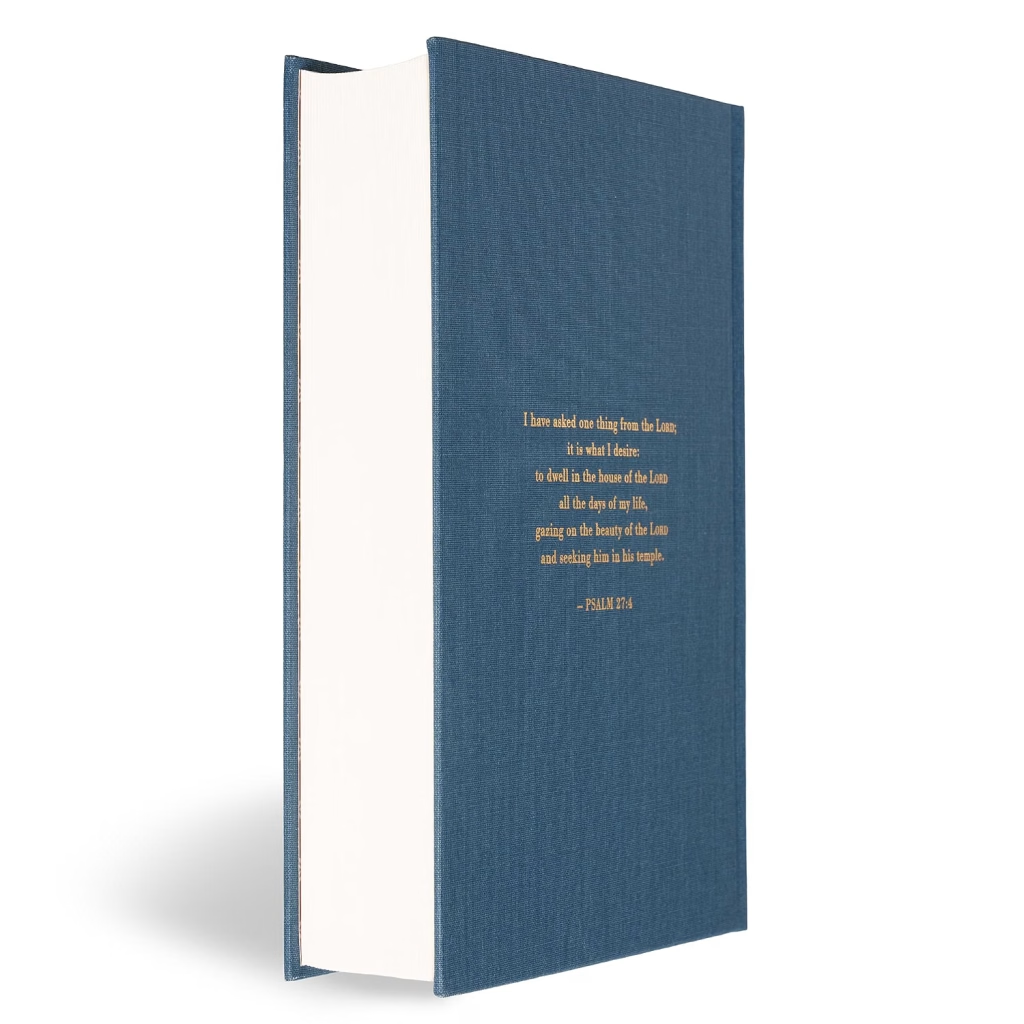
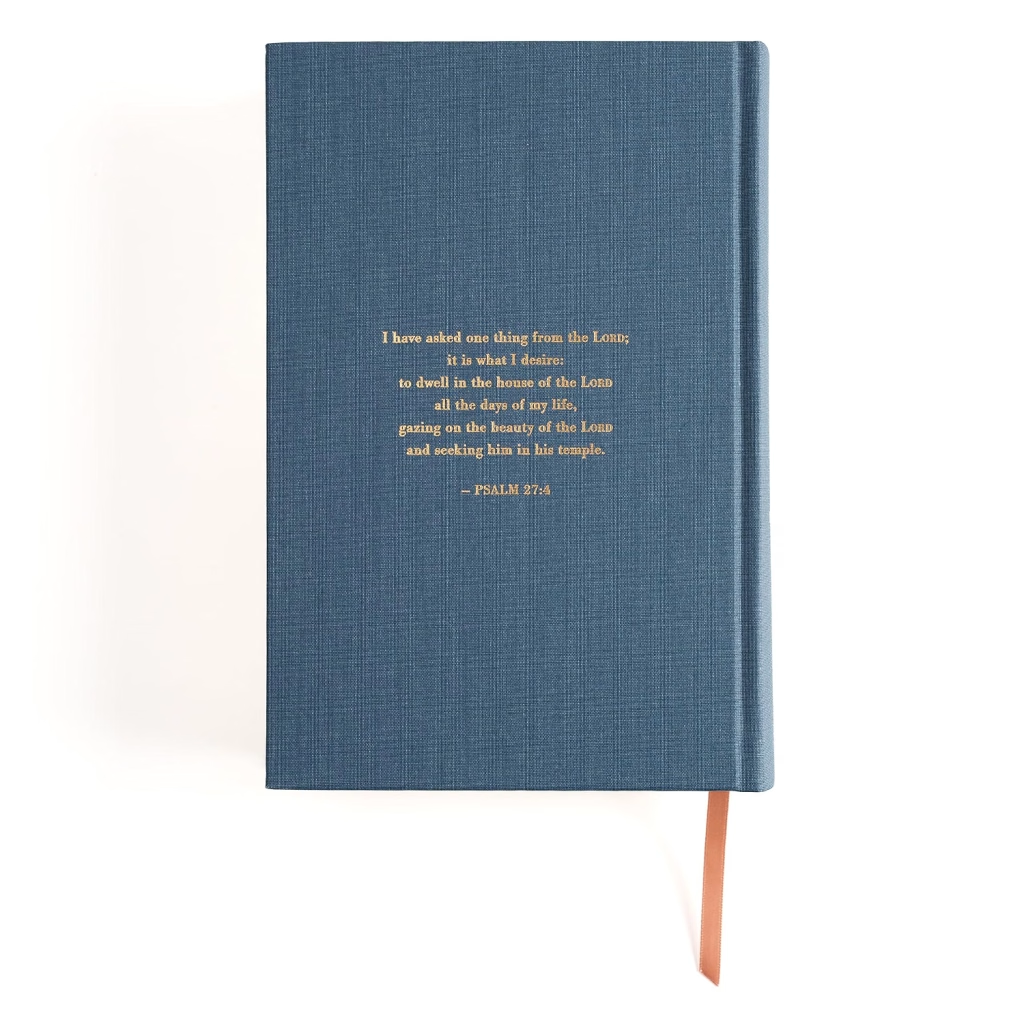
| Binding | Dark blue cloth over boards, sewn |
| Size | About 6.4 x 9.3 inches and just over 2 inches thick |
| Length | 1,440 pages |
| Paper | Cream with a smooth finish |
| Ribbon | One |
| Released | November 1, 2026 |
| List price | $39.99 |
| Also available | eBook, plus a companion podcast starting December 1 |
Who Trevin Wax Is
Wax knows the CSB from the inside. He served at Lifeway as the founding editor of The Gospel Project and later as the publisher for the Christian Standard Bible. Today he is vice president of resources and marketing at the North American Mission Board and a visiting professor at Cedarville University. He served as a missionary in Romania, and he writes a regular column at The Gospel Coalition.
You may know his 30 Days books. Psalms in 30 Days came out in 2021, and Life of Jesus in 30 Days and Letters of Paul in 30 Days followed. Each one sets a portion of Scripture into a pattern of prayer three times a day, morning, midday, and evening. Readers kept asking for a once-a-day version that would carry them through more of the Bible. This book is his answer. It runs to 396 daily liturgies and more than 475,000 words, and Wax admits he did not grasp the size of the job when he started.
He wrote it for two kinds of readers. The Christian who loves the Bible but struggles to pray, and the free-church believer who is curious about liturgy and has no idea where to begin.
How a Day Works
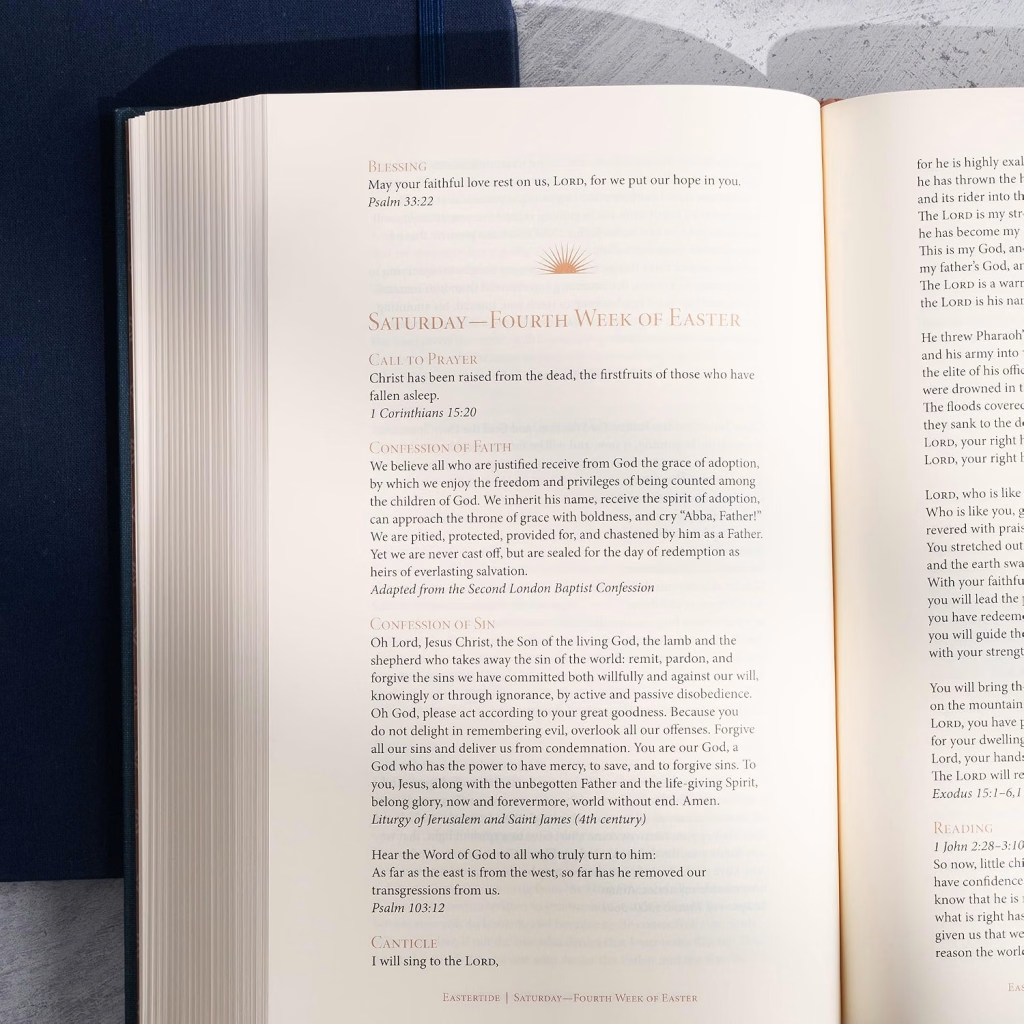
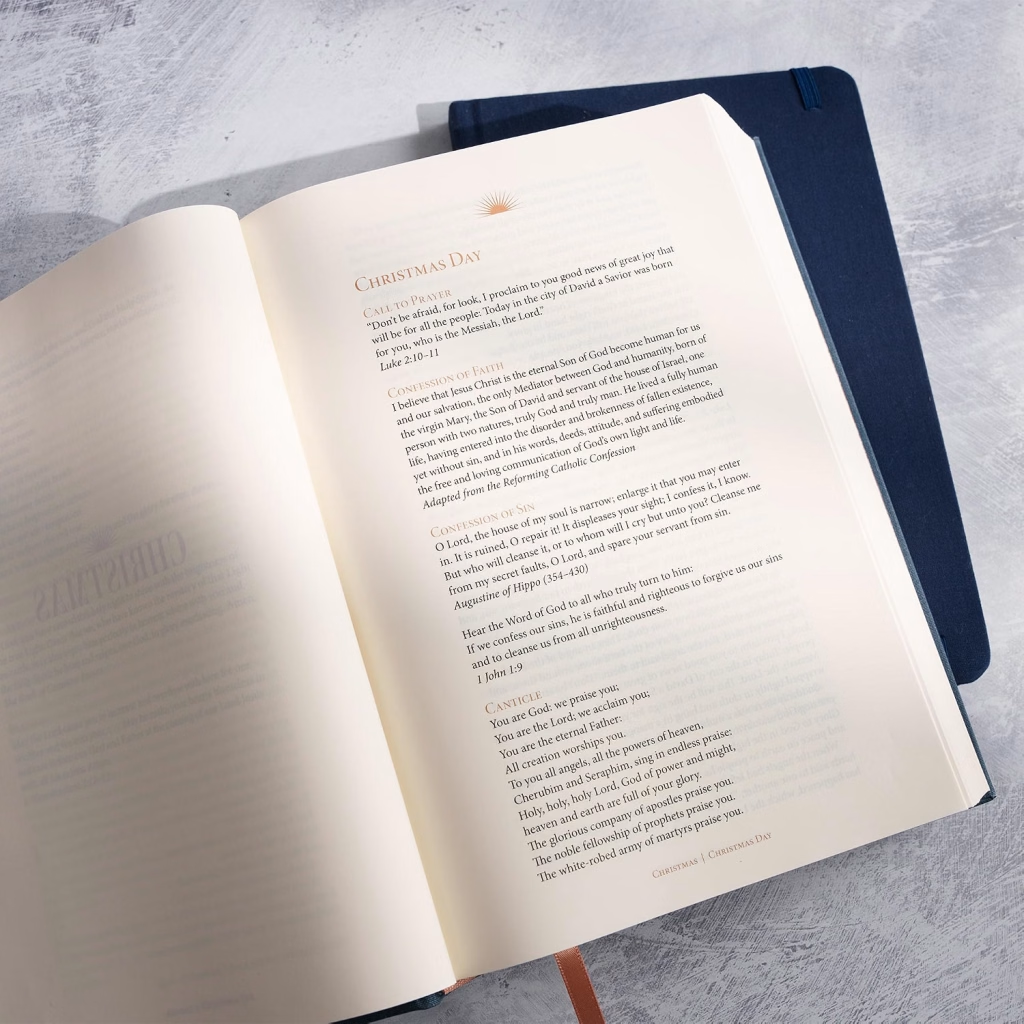
Every day follows the same ten movements in the same order. The repetition is on purpose. Once the shape settles into you, you stop wondering what comes next and start paying attention to God.
- Call to Prayer. A short opening that brings you before the Lord.
- Confession of Faith. The creeds and confessions of the church, so you say what you believe before you ask for anything.
- Confession of Sin. A prayer of confession from Scripture or church history, followed by a word of assurance from Scripture.
- Canticle. Usually a psalm, sometimes another song from Scripture.
- Reading. The day’s passage, set without verse numbers.
- Gloria. Glory to the Father, the Son, and the Holy Spirit.
- The Lord’s Prayer. Printed in full, every day.
- Intercessions and Personal Requests. Here you bring your own people and needs to God in your own words.
- Prayer of the Church. A prayer from a believer somewhere in the last two thousand years.
- Blessing. A benediction taken from Scripture.
Everything you need for the day is printed on the page. The Gloria and the Lord’s Prayer appear in full every day. The words of comfort after the confession of sin come around each week, and the Apostles’ Creed and the Nicene Creed come around every other week. You never have to hunt for the next piece.
If you have ever tried to pray the Daily Office from the Book of Common Prayer, you know how much juggling it can take. A prayer book, a table of readings, and a Bible, with ribbons in all three. Wax has done the juggling for you.
He says most people will finish in ten to twenty minutes. If you stay a while in intercession, plan on half an hour.
The readings are arranged so Scripture can talk to itself. A psalm of David may come just before or just after the moment in his life that drew it out of him. Over the year Wax wants you to hear from every author in the Bible, and by the end you will have prayed at least part of all 150 psalms.
The Voices Around the Reading
The prayers come from all over the family of God. Thomas Cranmer and the old English prayer book shaped much of the book, especially the confessions of sin and the collects. From the early church you’ll hear Clement of Rome, Athanasius, and Augustine, including the opening of his Confessions. From the medieval church come Anselm, the Irish missionary Columbanus, and the prayer known as St. Patrick’s Breastplate. Later voices include Martin Luther, the Anabaptist martyr Anna of Freiburg, Charles Spurgeon, William Wilberforce, Jane Austen, Amy Carmichael, and Richard Allen, the founder of the African Methodist Episcopal Church.
In Borrowed Words I mentioned Athanasius and his letter to a young man named Marcellinus about praying the Psalms. He shows up here too.
The confessions of faith go beyond the two great creeds. Wax includes lightly updated selections from the Belgic Confession (1561), the Heidelberg Catechism (1563), the Second London Baptist Confession (1689), and the New Hampshire Baptist Confession of Faith (1833), along with portions of the Lausanne Covenant. Baptist readers will hear their own family in that list.
One of Cranmer’s collects made it into the book, and it is a fitting prayer for anyone who picks this one up. He wrote it for the second Sunday in Advent, and it is a prayer about the Bible itself. Here it is as the 1662 prayer book has it.
“Blessed Lord, who hast caused all holy Scriptures to be written for our learning: Grant that we may in such wise hear them, read, mark, learn, and inwardly digest them, that by patience and comfort of thy holy Word, we may embrace and ever hold fast the blessed hope of everlasting life, which thou hast given us in our Saviour Jesus Christ. Amen.”
Book of Common Prayer, 1662
Devoted to the Prayers
Some readers will wonder whether set prayers belong in a Bible-believing church at all. I understand the worry. Jesus warned against vain repetition, and we have all heard a prayer recited so fast nobody could have meant it. I took up that objection in Borrowed Words and in In This Manner, Therefore, Pray, and I won’t repeat the whole case here. Luke gives us one more piece of evidence worth seeing.
“And they continued steadfastly in the apostles’ doctrine and fellowship, in the breaking of bread, and in prayers.”
Acts 2:42, NKJV
Look closely at the last phrase. The Greek reads tais proseuchais (ταῖς προσευχαῖς), the prayers, plural and with the article. The ESV keeps it as “the prayers.” The NKJV says “prayers,” and the CSB says “to prayer.” The old Pulpit Commentary reads the phrase as the common prayers of the church. One chapter later, Peter and John go up to the temple “at the hour of prayer, the ninth hour” (Acts 3:1), one of the set times Israel prayed each day. The first Christians prayed in their own words, and they also kept praying the prayers they had been given.
The verb deserves a look too. “Continued steadfastly” is proskartereō (προσκαρτερέω, G4342). It means to stay with something, to keep at it, to hold fast. Mark uses it for the small boat the disciples kept ready for Jesus beside the crowded shore (Mark 3:9). Paul uses it when he tells the Romans to continue steadfastly in prayer (Romans 12:12) and the Colossians to continue earnestly in prayer (Colossians 4:2). No book can make you devoted. A pattern kept day after day is one of the oldest ways God’s people have practiced that kind of steadiness.
The Shape of the Year
The book starts in Advent and walks through the church year. Advent opens with Old Testament prophecies of the Day of the Lord and New Testament passages about Christ’s return. Christmas turns to His first coming while looking toward His second. Epiphany shows His glory in His earthly ministry. Lent follows Him as He sets His face toward Jerusalem, and Holy Week takes you to the cross and the empty tomb. Easter is a fifty-day celebration that runs through the Ascension, Pentecost, and Trinity Sunday. Then Ordinary Time follows the early church and moves through the great story of the Old Testament.
Easter falls on a different date every year, so the book carries extra readings to keep the seasons lined up. That is why a 365-day year gets 396 liturgies.
If your church doesn’t follow the church calendar, don’t let that scare you off. Wax built it to be useful for churches that don’t. The seasons walk you through the life of Christ every year and then through the long story that led up to Him.
Advent begins Sunday, November 29 this year. If you have been looking for a place to start, you won’t find a better one.
The Podcast
Holman and Wax are also releasing a daily podcast that follows each liturgy word for word. The first episode comes out December 1, and the trailer is already up on Spotify and Apple Podcasts.
More than a hundred people lent their voices to it. Pastors and laypeople, young and old, men and women, singers and songwriters. None of them are named. Wax asked each one to pray the words to God as their own, and he insisted that no artificial intelligence be used for any voice. Each episode opens with a hymn melody suited to the season and moves through the liturgy over a quiet ambient soundscape. When the Scripture reading begins, the music stops, and you hear only the Word of God. Wax calls the result an “audio sanctuary,” and each episode runs ten to twelve minutes.
For the commute, the walk, or the days when your eyes are tired, the podcast lets you keep the rhythm without the book in your lap.
A Word About the Translation
Every reading comes from the CSB, with the verse numbers taken out so the passages read like a reader’s Bible. That suits a book made for praying out loud, alone or around a table. The CSB reads cleanly when spoken, and that counts for a lot when a child takes a turn reading the Scripture for the family.
I explained in Giving the Sense why the CSB now stands beside the NKJV in my teaching, and in Two Bibles Open on the Table why it is my translation of choice for personal reading and devotions. This book fits that second purpose exactly. It belongs to devotion. Study still happens at the desk.
When a line in the reading stops you and you want to know why the NKJV and CSB word it differently, save that question for the desk and a study Bible. The prayer book’s job is to keep you praying.
The Physical Book
This is a big book. At 1,440 pages and just over two inches thick, it belongs on a side table or a desk. The dark blue cloth-over-boards cover matches Letters of Paul in 30 Days, and the retailer listings give the binding as sewn. Wax says the cream paper was chosen to be thin enough to fit everything in one volume and opaque enough that the type doesn’t show through from the other side. There is a single ribbon.
If you want the content without the weight, there is also an eBook edition.
A Few Things to Know
It is heavy. Fourteen hundred pages is a lot to carry around. Plan on the book staying home and the podcast traveling with you.
It is a book of prayer. It isn’t built to explain the passages. Keep a study Bible nearby for that. Mine is the CSB Baker Illustrated Study Bible.
The verse numbers are gone. That helps the readings flow. It also means you’ll want your own Bible open when you need to mark a verse or find it again later.
One ribbon. Since everything for the day is printed in one place, one ribbon covers most days. If you keep a separate prayer list, tuck it in the back.
Written prayers can go stale. Wax says so himself. Any prayer said often enough can slide into the babbling Jesus warned about in Matthew 6:7. The cure is to slow down and mean it. The intercessions each day keep room for your own words, and the structure around them gives those words somewhere to stand.
The church year takes a little learning. If you grew up without Advent and Lent, the first few weeks may feel unfamiliar. Give it a season.
Who This Book Is For
If you read your Bible faithfully but your prayers have shrunk down to the same few sentences, this book will hand you a larger vocabulary, and most of it comes straight from Scripture.
If you come from a free-church background and have wondered about liturgy without knowing where to begin, this is a gentle and thoroughly biblical place to start. Wax wrote it with you in mind.
If you lead your family in devotions, the introduction shows how to pray it together. A parent opens with the call to prayer. Everyone says the confessions together, and the parent gives the word of assurance. A child can take the Gloria or the Lord’s Prayer, anyone can read the Scripture or the prayer of the church, and the parent closes with the blessing.
If you lead a small group or a prayer meeting, the liturgy gives you a ready frame. Wax suggests pastors can add hymns between the elements, a sermon after the reading, and the Lord’s Supper after the Lord’s Prayer.
If your days are full and your quiet time keeps getting squeezed out, the podcast can meet you in the car.
If you want a study Bible, look elsewhere. This book will help you pray the text, and you’ll need other tools to dig into it.
A Pastoral Word
The title comes from the first line of Psalm 27.
“The LORD is my light and my salvation; Whom shall I fear? The LORD is the strength of my life; Of whom shall I be afraid?”
Psalm 27:1, NKJV
“The LORD is my light and my salvation— whom should I fear? The LORD is the stronghold of my life— whom should I dread?”
Psalm 27:1, CSB
Light is ’or (אוֹר, H216). It is the first thing God spoke into the dark in Genesis 1:3. Let there be light. Later the Psalms use the same word for what Scripture does on a dark road. Your word is a lamp to my feet and a light to my path (Psalm 119:105). David could have said Jehovah gives him light. He goes further. Jehovah is his light.
The NKJV calls Jehovah “the strength of my life.” The CSB calls Him “the stronghold of my life.” Both are fair. The Hebrew word is ma’oz (מָעוֹז, H4581), a fortified place, a refuge, a strong defense. The NKJV hears the strength in it. The CSB hears the walls. Read the two side by side and you get both, which is one of the reasons I keep them open together.
Then David tells us what he wants most.
“One thing I have desired of the LORD, That will I seek: That I may dwell in the house of the LORD All the days of my life, To behold the beauty of the LORD, And to inquire in His temple.”
Psalm 27:4, NKJV
And a few verses later he tells us how it starts.
“When You said, ‘Seek My face,’ My heart said to You, ‘Your face, LORD, I will seek.’”
Psalm 27:8, NKJV
The Hebrew in verse 8 is compressed, and translators handle it differently. The NKJV hears God speaking first and David answering. The CSB has David’s own heart repeating the call, “Seek his face,” before he answers, “LORD, I will seek your face.” Either way the call comes before the answer. Seek is baqash (בָּקַשׁ, H1245), to search for, to go looking. Face is panim (פָּנִים, H6440), the presence of a person turned toward you.
Every liturgy in this book keeps that order. It opens with a call to prayer. God speaks first, and then we answer.
If you are afraid you don’t know how to pray, start there. You don’t have to find the words before you come. He has already called. Your part is to say yes, Lord, I will seek Your face. When your own faith feels thin, borrow the faith of the creeds. The confessions will give you words for sin you couldn’t name. On the days your heart has run dry, the psalm for the day can pray for you. Then, when the time for intercession comes, tell Him plainly what you need.
The LORD is your light and your salvation. Whom shall you fear?
The Words Under the Words
| Word | Original | Strong’s | Meaning |
|---|---|---|---|
| ’or | אוֹר | H216 | Light. Genesis 1:3, Psalm 27:1, Psalm 119:105 |
| yesha | יֶשַׁע | H3468 | Salvation, deliverance, safety. Psalm 27:1 |
| ma’oz | מָעוֹז | H4581 | A fortified place, refuge, stronghold, strength. Psalm 27:1 |
| baqash | בָּקַשׁ | H1245 | To seek, to search for. Psalm 27:4, Psalm 27:8 |
| panim | פָּנִים | H6440 | Face, presence. Psalm 27:8 |
| proskartereō | προσκαρτερέω | G4342 | To keep at, hold fast, stay devoted. Mark 3:9, Acts 1:14, Acts 2:42, Romans 12:12, Colossians 4:2 |
| proseuchē | προσευχή | G4335 | Prayer. Plural with the article in Acts 2:42, the prayers |
Going Deeper
If you want to hear Wax explain the project himself, read his post The Lord Is My Light. An Audio Sanctuary and a Book to Hold at The Gospel Coalition and Nadya Williams’s interview with him at Mere Orthodoxy.
Here on the site, Borrowed Words makes the case for praying prayers someone else wrote. In This Manner, Therefore, Pray opens up the Lord’s Prayer one request at a time. And The Prayer Jesus Prayed looks at the psalm Jesus prayed from the cross.
If a year-long book feels like too much to start with, Wax’s Psalms in 30 Days is a smaller first step into the same kind of praying.
The Verdict
Recommended, especially if your Bible reading is strong and your prayer life is thin. Get it before November 29, and let Advent be your first season with it.
Scripture quotations marked NKJV are taken from the New King James Version®. Copyright © 1982 by Thomas Nelson. Used by permission. All rights reserved. Scripture quotations marked CSB have been taken from the Christian Standard Bible®, Copyright © 2017 by Holman Bible Publishers. Used by permission. Christian Standard Bible® and CSB® are federally registered trademarks of Holman Bible Publishers.

Leave a Reply