
This is part nine of Revive Us Again, a ten-part series on revival and renewal in Scripture and church history.
For I will pour water on him who is thirsty, And floods on the dry ground; I will pour My Spirit on your descendants, And My blessing on your offspring.
Isaiah 44:3 NKJV
In 1949, in a small cottage in the parish of Barvas on the Isle of Lewis, two sisters got down to pray most nights at ten o’clock and stayed down until two or three in the morning. Peggy Smith was eighty-four. Christine was eighty-two. One of them was blind, and the other was so crippled with arthritis that getting to church was beyond her. They could not sit in the pew on the Lord’s Day. They could still pray.
Lewis sits at the top of the Outer Hebrides, off the northwest coast of Scotland. In those years it was a place of crofts and peat fires and fishing boats, Gaelic in the kitchen and psalms sung without instruments in the kirk. The sisters grieved because the young people of their parish had drifted from the faith of their fathers, and the churches seemed powerless to bring them back.
So they took hold of a promise. Isaiah 44:3. “I will pour water on him who is thirsty, And floods on the dry ground.” They pleaded it back to God, night after night, as if He had signed His name to it. He had.
The Barn Among the Straw
The sisters did not keep their burden to themselves. They sent word to their minister and urged him to gather his elders and deacons to wait on God in prayer at least two nights a week. He did. For months those men met, and some nights they met in a barn among the straw, praying for the same thing two old women were praying for a few miles away.
Nobody outside Barvas knew about any of it. No evangelist was on the way, and no meetings had been announced. All anyone could have seen was a handful of men in a cold barn and two sisters who could not leave their cottage.
That is what the fire fell on.
Before He Set Foot on the Island
In December 1949 a Faith Mission preacher named Duncan Campbell came to Lewis. He had been asked for ten days. The awakening that followed ran through Lewis and Harris from 1949 into the early 1950s. Churches filled. Prayer meetings ran late into the night, and people came under conviction of sin in their own homes.
Campbell’s name became tied to the Hebrides revival for the rest of his life, and he spent much of that life correcting people about it. “I did not bring revival to the Hebrides,” he said. “Revival was there before I ever set foot on the island.” He drew a sharp line between an evangelistic campaign and what he saw on Lewis. In a campaign, a preacher draws a crowd. In revival, he said, God moves in the district, and the whole community becomes God conscious.
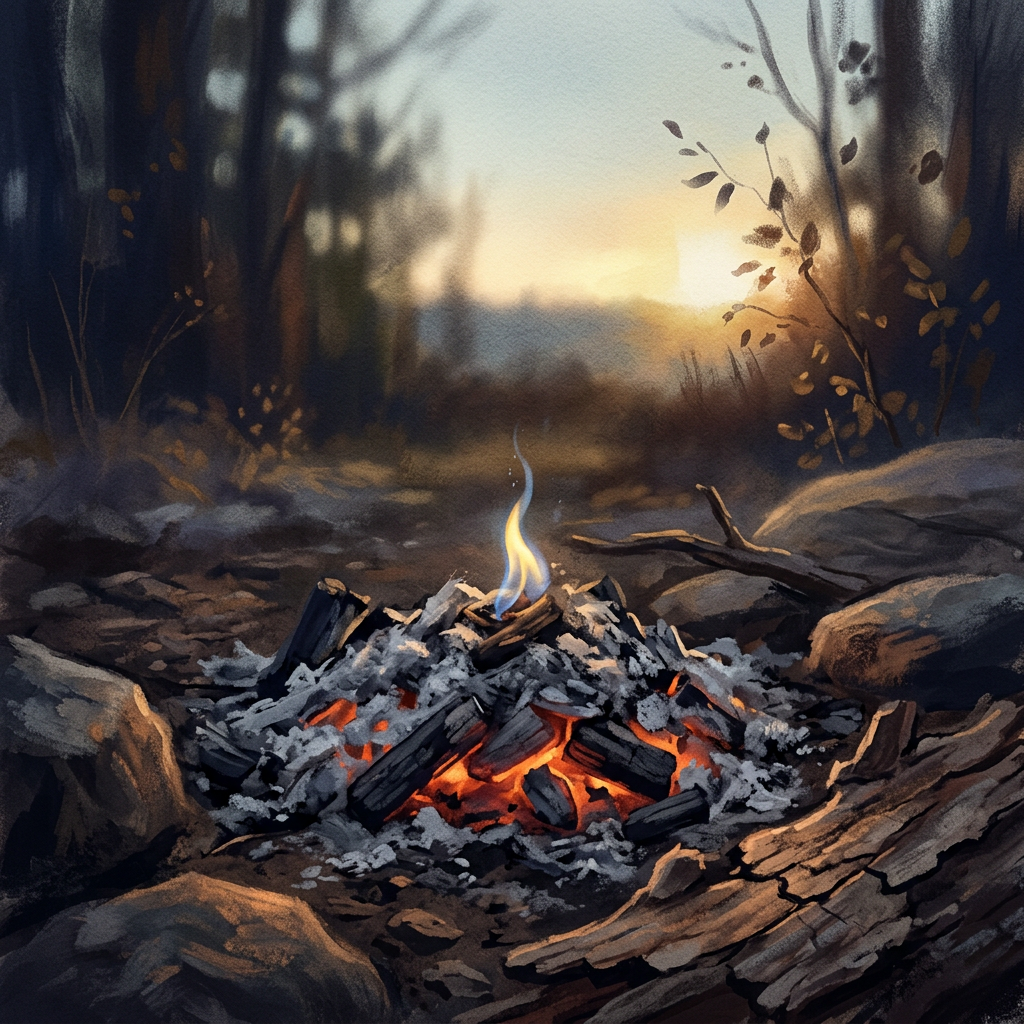
The revival on Lewis started in a cottage and a barn. Duncan Campbell arrived to find the fire already lit.
The Ash on Lewis
This series promised not to skip the ash, and Lewis has some.
Not everyone on the island welcomed what happened. Some ministers and congregations opposed the meetings and opposed Campbell’s teaching. And the story grew in the telling. Campbell preached about Lewis for decades, and his later retellings carried details that are hard to confirm. A 2018 study at the University of Glasgow concluded that Campbell’s own interpretation, shaped by his particular theology, has muddied historical assessments of the revival, and that Campbell and the revival must not be treated as the same thing. In 2023 Tom Lennie published a full history whose subtitle says it plainly. The Famed Lewis Awakening that Never Occurred and the Glorious Revival that Did.
Christians who love revival can take that as good news. Lennie’s point is that the legends were never needed. The documented revival is more than enough. Two old women prayed, a few men met in a barn, and God visited an island. When we pad a story like that, we are telling God His work was not impressive enough. Post 6 gave us Edwards’ test. It applies to the stories we tell about revival as much as to the revivals themselves.
A Chapel in Kentucky
Now cross the ocean and jump twenty years.
On the morning of February 3, 1970, students at Asbury College in Wilmore, Kentucky filed into Hughes Auditorium for a regular chapel service. The academic dean, Custer Reynolds, was scheduled to speak. Instead he gave his time to the students and invited anyone who wanted to share a testimony. Students came forward to speak, some of them confessing sin, and others knelt at the altar to pray. The chapel hour ended, and the meeting did not.
The meeting ran day and night for about a week, and classes were canceled. Christianity Today reported a year later that the meeting ran without a break for 185 hours. Clarence Hunter of Asbury told the magazine, “We just feel the presence of God. We have since February third.” Students went out in witness teams to churches across the country, and Asbury counts at least 130 college campuses that received them.
Fifty-three years later it happened again in the same room. On Wednesday, February 8, 2023, a morning chapel service ended and a few students stayed to pray. They were still there that night. The university president, Kevin Brown, sent out a two-sentence email. “There’s worship happening in Hughes. You’re welcome to join.” Over the next sixteen days, people came from across the country and around the world. Estimates of total visitors ran from fifty to seventy thousand in a town of about six thousand.
Asbury’s leaders made choices every church can learn from. They barred livestreaming inside Hughes Auditorium. For a stretch they kept the main room for students and young adults, so the college generation would not be crowded out by everyone else who came. And they kept well-known names off the platform. Near the end, as the campus hosted a national collegiate day of prayer, Brown said, “There was no program planning committee, and it’s not because of celebrities or professional musicians. This has been a nameless, titleless movement, and tonight will be no different.”
Whether that outpouring bears fruit for a generation is still being written. The test will be the same one Edwards gave. Did it exalt Jesus, turn people from sin, send them to the Scriptures, and leave them loving God and their neighbor? But the leaders refused to build a platform on it, and that alone sets it apart from much of what has passed for revival in the last century.
The Old Pray and the Young Are Found
Put Barvas and Wilmore side by side, and something stands out. On Lewis, the people praying were in their eighties. At Asbury, the people God met were in their teens and twenties. Revival has nearly always needed both.
Scripture saw this coming. When Peter stood up on the day of Pentecost, he quoted Joel. “And it shall come to pass in the last days, says God, That I will pour out of My Spirit on all flesh; Your sons and your daughters shall prophesy, Your young men shall see visions, Your old men shall dream dreams” (Acts 2:17, NKJV). One outpouring falls on both generations.
Luke tells us about a woman in the temple when Mary and Joseph brought the infant Jesus. Anna “was a widow of about eighty-four years, who did not depart from the temple, but served God with fastings and prayers night and day” (Luke 2:37, NKJV). Peggy Smith’s age. Anna had prayed for decades for the redemption of Jerusalem, and in her old age she held the answer in her arms.
The psalmist prayed like an old saint who knew his work was not finished. “Now also when I am old and grayheaded, O God, do not forsake me, Until I declare Your strength to this generation, Your power to everyone who is to come” (Psalm 71:18, NKJV). And Paul wrote to a young pastor who must have felt the gray heads watching him. “Let no one despise your youth, but be an example to the believers in word, in conduct, in love, in spirit, in faith, in purity” (1 Timothy 4:12, NKJV).
Look again at the promise the sisters pleaded. Isaiah 44:3 is a promise about the next generation. “I will pour My Spirit on your descendants, And My blessing on your offspring.” The verb yatsaq is the one for pouring out oil or water from a vessel. The thirsty one in verse 3 receives water, and the children in verse 4 “spring up among the grass Like willows by the watercourses.” The old prayed for the young, and God answered the young.
Students at Asbury in 1970 and 2023 did not get there alone. Someone prayed for them, often someone they would never meet. And when God moves among the young, they need older believers standing beside them to teach them the Scriptures, test what they are seeing, and help it last.
Kindling
Find the oldest praying believer in your church this week. Sit down with them and ask what they have been praying for. Then ask if you can pray with them. You may find that a revival you will one day thank God for is already being prayed for in somebody’s living room.
If you are the one with gray hair, turn it around. Find a young person in your church and ask what you can pray for. Then keep praying, morning by morning, whether you live to see the answer or not.
For I will pour water on him who is thirsty, And floods on the dry ground; I will pour My Spirit on your descendants, And My blessing on your offspring; They will spring up among the grass Like willows by the watercourses.
Isaiah 44:3–4 NKJV
Word Study
| Term | Original | Strong’s | Meaning | Key text |
|---|---|---|---|---|
| tsame | צָמֵא | H6771 | thirsty, parched | Isa 44:3 |
| yabbashah | יַבָּשָׁה | H3004 | dry ground, dry land | Isa 44:3 |
| yatsaq | יָצַק | H3332 | to pour, pour out | Isa 44:3 |
| zera | זֶרַע | H2233 | seed, offspring, descendants | Isa 44:3 |
| neotēs | νεότης | G3503 | youth, youthfulness | 1 Tim 4:12 |
Discussion Questions
- Peggy and Christine Smith could not get to church, but they could pray. What keeps you from praying that has nothing to do with your ability to do it?
- Why do you think Duncan Campbell worked so hard to tell people he did not bring revival to Lewis?
- Asbury’s leaders barred livestreaming and kept famous names off the platform. Why might those choices have mattered?
- Read Acts 2:17 and Isaiah 44:3–4. What part do the old and the young each play in these promises?
- Who in your church is old enough to be praying for you, and who is young enough for you to pray for?
Going Deeper
- Tom Lennie, Island Aflame (Christian Focus, 2023). A careful history of the Lewis revival that separates what happened from what grew in the telling, built on eyewitness accounts.
- Colin and Mary Peckham, Sounds from Heaven (Christian Focus, 2011 edition). Mary Peckham came to faith in the Lewis revival as a young woman, and her eyewitness account is the heart of the book.
- Duncan Campbell, The Lewis Awakening. Campbell’s own short account, written to correct reports he considered unreliable. It is free to read on the Revival Library website.
- Robert E. Coleman, ed., One Divine Moment (Revell, 1970). Eyewitness accounts of the 1970 Asbury revival, gathered the same year it happened.
This post is drawn from The Fire Shall Never Go Out, my book in progress on two thousand years of revival and renewal.

Leave a Reply