
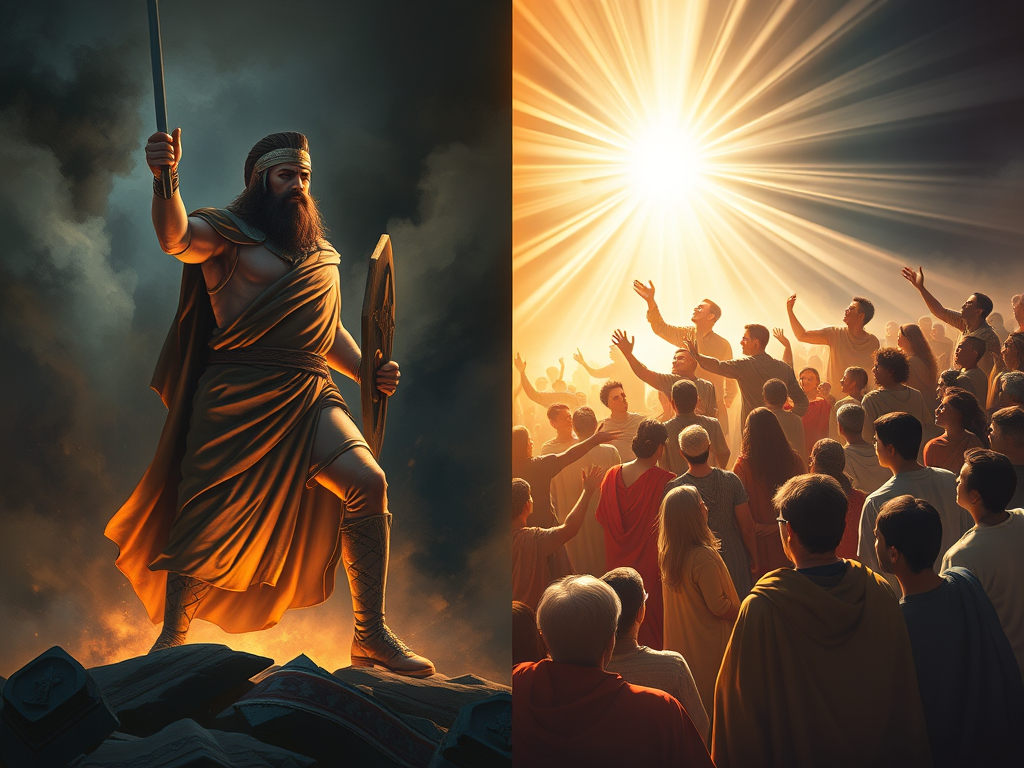
Judges and Acts are both “Spirit books,” but they tell two very different stories about how God empowers His people: isolated heroes for crisis in Judges, and a whole community for ongoing mission in Acts.
One-off heroes in Judges
The book of Judges repeatedly uses phrases like “the Spirit of the LORD came upon him” to describe how God raises individual deliverers. With Othniel, “the Spirit of the LORD came upon him” and he led Israel into victory, marking him as an extraordinary, Spirit-empowered judge in a moment of national need.
The same pattern appears with Gideon, Jephthah, and Samson: the Spirit comes on them so they can defeat specific enemies and rescue God’s people. Scholars emphasize that, in the Old Testament, such experiences of the Spirit usually set people apart as exceptional and are closely tied to particular tasks or episodes rather than an ongoing, shared reality for the whole nation.
A Spirit-filled people in Acts
Acts opens with Jesus’ promise that His followers will “receive power when the Holy Spirit has come upon you,” and that this will turn them into witnesses from Jerusalem to the ends of the earth. At Pentecost, that promise is fulfilled as “everyone present was filled with the Holy Spirit” and empowered to speak in other languages, signaling a new era where the Spirit rests on the entire community, not just a few leaders.
From that point on, Acts repeatedly describes believers being “filled with the Holy Spirit” for bold preaching, wise leadership, and generous community life. Commentators point out that this filling becomes a normal part of Christian identity and mission—no longer limited, occasional, or reserved for a select few, but a shared gift that equips all who belong to Christ.
From occasional empowerment to shared indwelling
Putting Judges and Acts side by side highlights a key shift: in Judges, the Spirit mostly works from the outside in, coming upon individuals for short bursts of power, while in Acts, the Spirit dwells within and among believers as an ongoing presence. Old Testament saints still depended on the Spirit to trust and obey God, but Pentecost marks a fuller, more widespread experience of His indwelling and overflow after Jesus’ death, resurrection, and exaltation.
For disciples today, that means the “Gideon pattern” of God putting on one person in a crisis has been expanded into the “Acts pattern,” where God clothes and fills an entire people for worship, witness, service, and everyday faithfulness. Every believer, not just a heroic few, is invited to live as a Spirit-empowered participant in God’s mission—an ordinary life made available for extraordinary grace.

Leave a Reply