
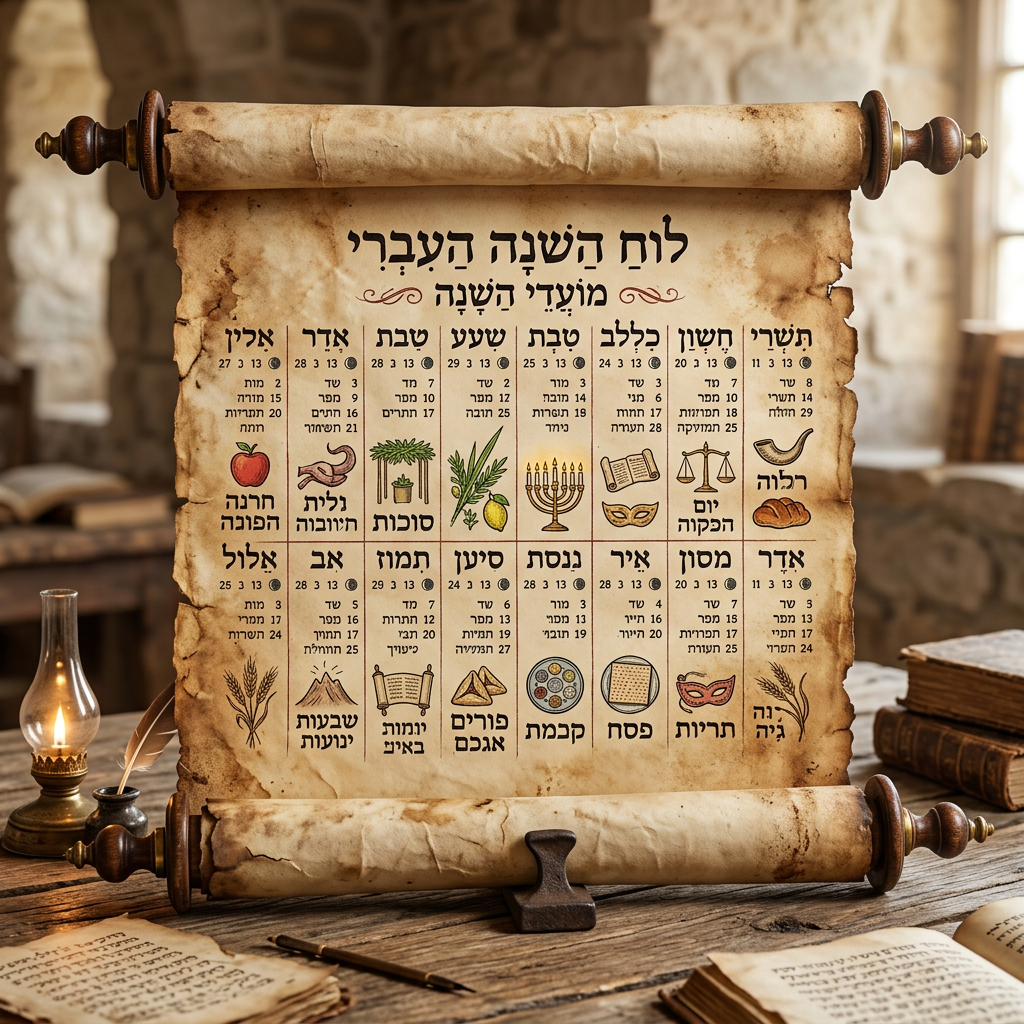
Jewish life ran on a calendar, and the calendar was a teacher.
Each appointed feast carried its own story, ceremonies, songs, and symbols. Passover remembered the lamb and the blood on the doorpost. Tabernacles remembered the wilderness, the wandering, and the pillar of cloud and fire. The Day of Atonement remembered that sin had a price and the price had to be paid. The feasts were not folk traditions. They were rehearsals. God had given Israel a calendar that walked them, year after year, into the same questions.
Jesus knew the calendar by heart. He grew up walking to Jerusalem for the feasts. He watched the water poured at Tabernacles and the lamps lit in the temple. He sang the Hallel at Passover. He knew what every gesture meant.
So when he wanted a sentence to land with the full weight of a thousand-year tradition, he waited for the right day. He stood up at the right moment, in the right court, while the right ceremony was unfolding, and said one line that took the whole feast and pointed it at himself.
The feast was the setup. The sentence was the punchline. You miss the joke if you do not know the calendar.
Living water at Tabernacles
Tabernacles, Sukkot, was the great fall feast. Eight days. Israel lived in temporary booths to remember the wilderness, when God himself was their tent and their shade. There were processions and songs and a ceremony that gathered the whole crowd at the temple every morning.
Every morning of the feast, a priest carried a golden pitcher down the long stair from the temple court to the Pool of Siloam, filled it with water, and brought it back up in procession. The Levites sang the Hallel as he came. The water was poured out at the altar alongside the morning sacrifice. The whole ceremony was a plea. Send rain on the fields. Send the Spirit on the people you said you would.
On the seventh day this water ceremony was performed seven times. The eighth day, the last and greatest day of the feast, was the climax of the whole thing.
On that day, in that exact moment, Jesus stood up and cried out. “If anyone thirsts, let him come to Me and drink. He who believes in Me, as the Scripture has said, out of his heart will flow rivers of living water” (John 7:37-38, NKJV).
John tells us he was talking about the Spirit they would receive. He stood up in the middle of the water ceremony itself, with the pitcher still wet in the priest’s hand, and said the thing the ceremony had been begging for had a name and an address. He hijacked the morning prayer of his nation and gave it a face.
The light of the world at the festival of lights
Same feast. Same courts. A different ceremony.
During Tabernacles the temple was lit at night by four enormous golden lampstands set up in the Court of the Women. The Mishnah says the light from those lampstands was so bright the whole city of Jerusalem caught the glow. The men danced under the lamps with torches in their hands while the Levites sang. It was a remembrance of the pillar of fire that led Israel in the wilderness.
Then the feast ended. The lamps were extinguished. In that very court, with the smoke still hanging in the air, Jesus said it.
“I am the light of the world. He who follows Me shall not walk in darkness, but have the light of life” (John 8:12, NKJV).
The lamps had just gone out. He was claiming the thing the lamps had been pointing at. The pillar of fire that led Israel through the wilderness had not disappeared. It had a face now. If you read the saying without the calendar, it is a lovely sentence. If you read it with the calendar, it is a coronation.
The bread of life near Passover
John tells us the Passover was near (John 6:4). That is not throwaway scene-setting. He wants us reading this chapter through Passover eyes.
Passover was the feast that remembered bread. Unleavened bread eaten in haste with the loins girded and the staff in hand. Manna in the wilderness for forty years. Every Jewish household near the feast was clearing out the old leaven, preparing to eat the bread of haste again.
In that setting, with bread already on every mind, Jesus feeds five thousand with bread he multiplies from a boy’s lunch. The crowd brings up Moses. Our fathers ate manna in the desert. Jesus tells them Moses did not give the bread from heaven. The Father gives the true bread, and the true bread is a person.
“I am the bread of life. He who comes to Me shall never hunger” (John 6:35, NKJV).
Most of the crowd left him after this. They wanted a free lunch. He had offered them himself, near the feast that remembered bread from heaven and lambs whose blood was painted on the doorpost. He timed the words to the season, and the season did the heavy lifting.
God still picks moments
Six passages walking through three feasts. Six moments where the day itself was doing the work. Jesus did not invent the imagery. He stepped into a calendar his Father had set in motion at Sinai a millennium and a half before, and he revealed himself as the thing the calendar had always been about. The feast was a finger pointing. He was what the finger had been pointing at.
There is a takeaway in this for our own time. God still works in seasons. Not in the same way as the appointed feasts of Israel, but in his patient providential ordering of when. The day a verse finds you, the day a friend calls, the day the test comes back, the day the door opens or closes. He has not stopped reading the room. He still picks moments.
Watch your calendar. Not for omens. For mercies you would have missed if you had not looked at the date.
This is part of the Hidden in Plain Sight series.

Leave a Reply